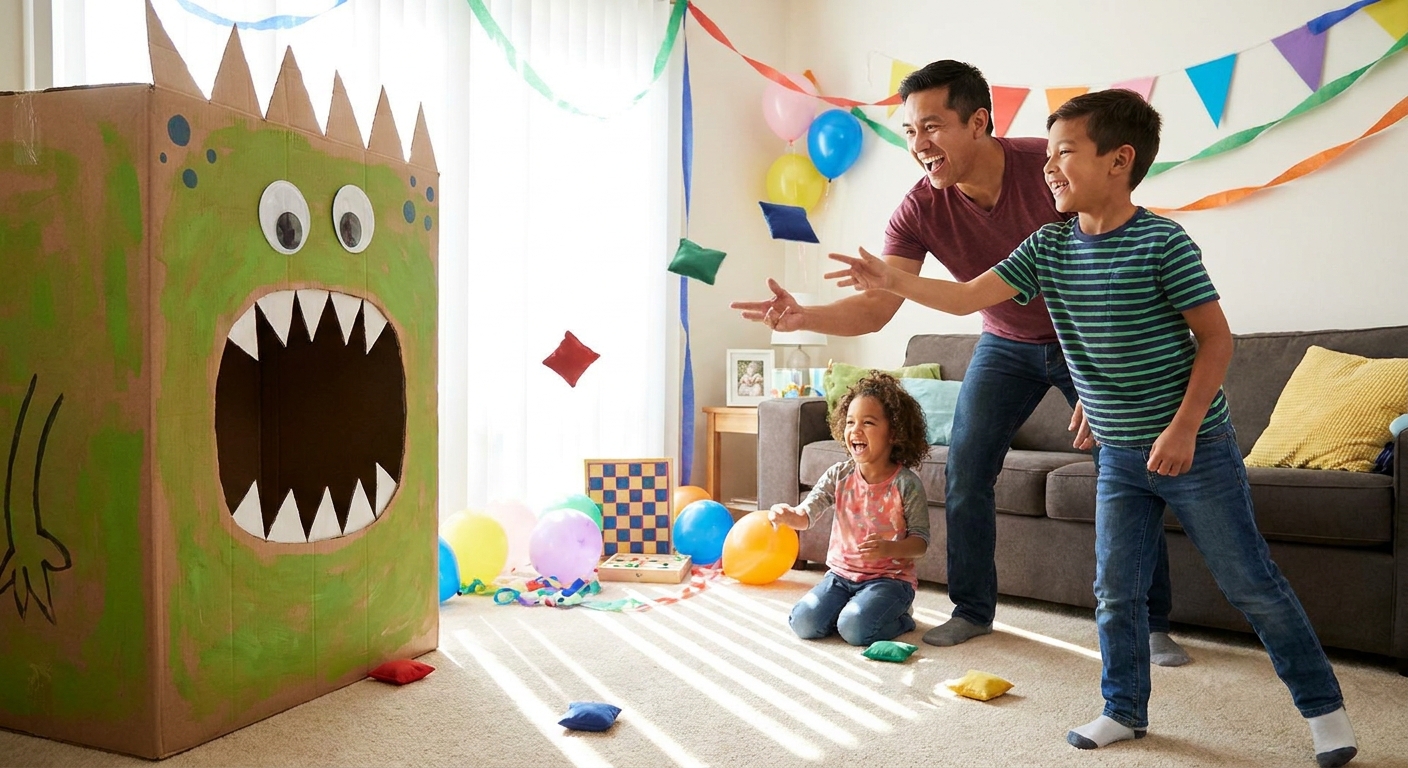

One rainy afternoon in Yorkshire, I tried to keep my three kids entertained with a cardboard box, a roll of tape, and what I confidently announced was an “indoor fishing expedition.” Ten minutes later we had paper fish everywhere, a magnet stuck to the fridge, and a suspiciously enthusiastic toddler shouting, “I CAUGHT A PUN.”
Which, honestly, is the dream.
This DIY magnetic joke fishing game is part craft, part party game, part tiny comedy show. Kids “fish” for colourful paper fish, then flip them over to reveal a joke. It is perfect for birthdays, sleepovers, rainy days, classroom fun, or any time you need a screen-free win that feels like a mini carnival.
Quick stats for scanning parents: 15 to 25 minutes to make (faster if you pre-cut), 10 seconds to set up, mess level low-to-medium (paper fish will travel, as if migrating).

What you will make
You are building:
- Magnetic fishing rods (simple sticks with string and a magnet at the end)
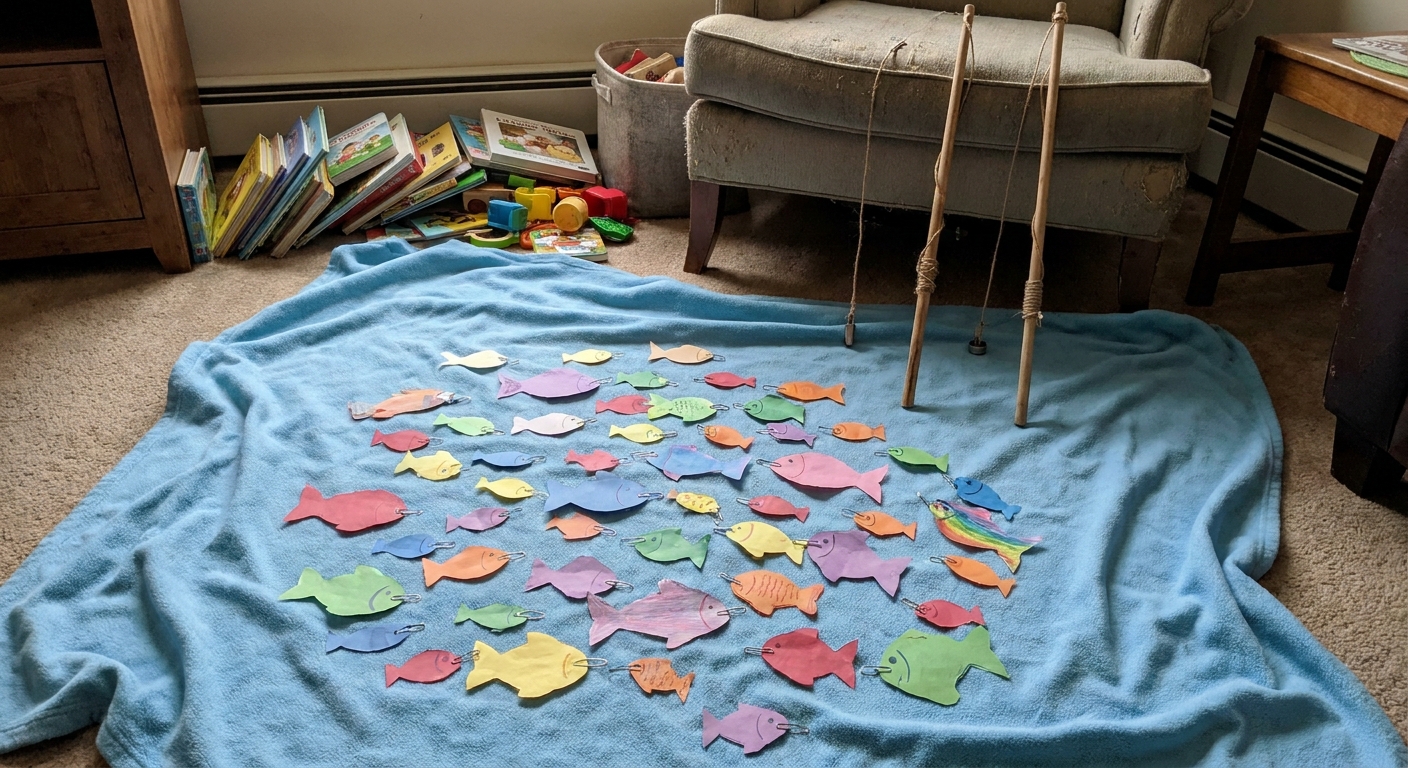
- Punny paper fish (each with a paperclip “mouth” and a hidden joke on the back)
- An easy game setup with rules you can tweak for different ages
Supplies (use what you have)
For the fishing rods
- 1 stick per player (a wooden dowel, a clean garden cane, a ruler, or a sturdy paper towel tube)
- String or yarn (about 60 to 90 cm per rod)
- 1 small strong magnet per rod (stronger is easier, especially for little hands)
- Tape (strong tape helps) or a glue gun (grown-up job)
- Optional: washi tape, stickers, paint for decorating
For the fish
- Cardstock or cereal box cardboard (thicker lasts longer)
- Scissors
- Markers or crayons
- Paperclips (1 per fish)
- Optional: googly eyes (I will never say no)
For the “pond”
- A blue blanket, bedsheet, or tablecloth
- Optional: a laundry basket, kiddie pool (dry), or a taped-off “pond” square on the floor
Safety note (please read, even if you are running on cold tea): The biggest magnet risk is swallowing more than one magnet (or a magnet and a bit of metal). That can cause serious internal injury. Keep magnets out of reach when not in use, fully wrap and enclose them so they cannot pop off, and bin any rod if the magnet loosens or cracks. Magnets and small parts are not for under-3s, and older kids still need close supervision. If a magnet is swallowed (or you even suspect it), seek urgent medical advice.
If you have a child who mouths things, skip magnets and play “hook a loop” with pipe cleaners instead (safe hook ideas are in the FAQ).
Make the magnetic fishing rods
Step 1: Attach the string
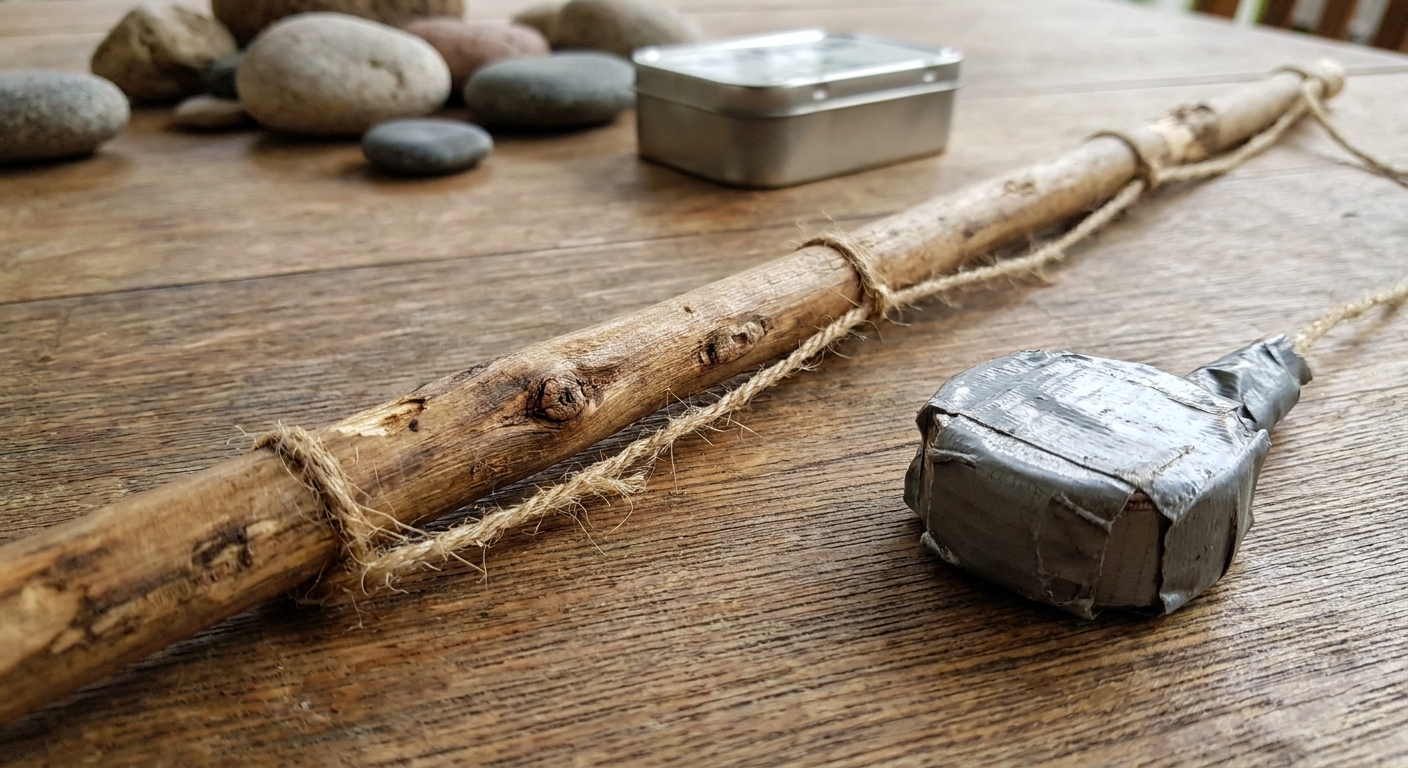
Tie or tape string to one end of your stick. If you are using a smooth dowel, wrap tape around the stick and over the string a few times so it cannot slide off mid-catch.
Step 2: Secure the magnet (properly)
At the other end of the string, tie a tight knot so the knot sits right against the magnet. Then attach the magnet so it is fully enclosed and cannot peel free.
- Tape method: Place the magnet at the end of the string (knot touching the magnet) and wrap it tightly with tape. Keep wrapping until the magnet is completely covered and the tape cannot lift at the edges. Then add a second layer, because kids fish like they are reeling in a shark.
- Glue gun method (stronger with a tiny tweak): If you can, lightly roughen the magnet surface with sandpaper first, then glue the knot to the magnet, let it cool, and wrap with strong tape to fully cover the magnet. Hot glue can pop off smooth surfaces under enthusiastic tugging, so tape is doing a lot of the heroic work here.
Tug test: Before you hand it over, give the magnet a firm pull. If anything shifts, add more tape now, not during the inevitable “I caught two at once!” moment.
Step 3: Add a “reel” (optional but fun)
Tape a bottle cap or small cardboard circle to the rod as a pretend reel. This achieves nothing practical and everything emotionally.
Make punny fish with hidden jokes
Step 1: Cut out fish shapes
Draw simple fish outlines on cardstock or cereal box cardboard and cut them out. Aim for palm-sized. Too tiny and the jokes get cramped. Too huge and the pond becomes a full-on aquarium.
Step 2: Decorate the front
Let kids go wild with colours, stripes, spots, and serious artistic decisions like “this fish has eyebrows.” Add googly eyes if you have them.
Step 3: Add the “mouth” paperclip
Slide a paperclip onto the fish near the mouth area. This is what the magnet will grab.
Step 4: Write the joke on the back
On the back, write one short joke per fish. Keep it big and readable. If you have mixed readers, add a little doodle clue so non-readers can bring the fish to a grown-up for the punchline reveal.
Pro tip: If your marker bleeds through, glue two fish shapes back-to-back so the joke stays secret on the reverse side.

Jokes to put on your fish
Here are kid-friendly groaners, tested in my living room and approved by the toughest critics on Earth (mine).
- What do fish say when they hit a wall? Dam!
- Why did the fish blush? Because it saw the ocean’s bottom.
- What do you call a fish with no eyes? Fsh.
- How do fish get to school? By octo-bus.
- What kind of music do fish like? Something catchy.
- Why are fish so smart? Because they live in schools.
- What did the fish say to the comedian? You’re krilling me!
- Where do fish keep their money? In a river bank.
- What do you call a fish who works with tools? A hammerhead.
- Why did the fish get bad grades? It was below sea level.
- What do you call a fish that tells jokes? A pun-guin. (Okay, not a fish, but it swims and it is funny.)
- What do you get when you cross a fish and an elephant? Swimming trunks.
- What’s a fish’s favourite game? Fin-ger painting.
- Why don’t fish play football? They’re scared of the net.
- What do fish use to measure? Fin-ch tape.
If your crew loves jokes in general, our kids jokes guide has loads more you can copy onto extra fish.
Set up your pond
- Spread a blue blanket on the floor, then toss the fish on top.
- Want a slightly trickier version? Tuck a few fish just under the blanket edges so kids have to “angle” for them. Consider this hard mode because the magnet may snag less reliably.
- Want boundaries? Tape a square on the floor as the pond, or use a laundry basket as a fish bin kids stand around.
Party trick: Dim the lights slightly and put on gentle ocean sounds. Or do what I do and hum the Jaws theme until everyone begs you to stop.
How to play
Classic joke fishing
- Each player gets a rod.
- Set a timer for 60 seconds.
- Fish as many as you can. For every fish you catch, you must read the joke out loud (or have an adult read it).
- Most fish caught wins, or most giggles wins, which is my preferred scoring system.
Colour points (good for mixed ages)
Assign point values by colour:
- Blue fish = 1 point
- Green fish = 2 points
- Red fish = 3 points
Little kids can focus on catching anything, older kids can get strategic.
Secret mission fish
Write a few “mission” cards on the back:
- Tell your best silly laugh
- Do your best fish face
- Compliment another player
- Make up a brand new sea pun
These are brilliant for keeping the energy fun without making it too competitive.
Make it easier or harder
Easier for little ones
- Use bigger fish and bigger paperclips.
- Shorten the string so the magnet does not swing wildly.
- Use fewer fish at a time so catches feel instant and glorious.
Trickier for bigger kids
- Longer string.
- Smaller fish.
- Make “rare” fish worth extra points.
- Add a “no touching the blanket” rule for proper concentration faces.
Quick party tips
- Make more fish than you think you need. For 8 kids, I like 25 to 40 fish so the pond stays busy.
- Laminate-lite hack: A strip of clear tape over the joke helps it survive sticky fingers.
- Keep a repair station. Put tape and spare paperclips nearby so the game never stops for long.
- Have a “joke reader” role. If some kids cannot read yet, they can be the official fish presenter to a grown-up.
- Fast reset: Choose one child to be the “pond keeper” who tosses fish back into the pond between rounds. Give them a basket for quick collection and you will feel like a genius.
If your party crew loves homemade games, have a peek at our party games guide for more ideas that do not require hiring a circus.
Storage and re-use
Slide the fish into an envelope or a shoebox, and wrap the rods with the string around the stick. If you used cereal box cardboard, keep the set flat so it does not curl.
Magnet housekeeping: When the game is over, store the rods somewhere high and out of reach, and do a quick check that the magnet wrapping is still fully sealed before you put it away.
We reuse ours for:
- rainy-day boredom rescues
- birthday parties
- family game night
- that awkward half hour before dinner when everyone is suddenly starving and dramatic
More giggles-and-glue
These are in the same spirit of “simple craft, big laughs”:
FAQ
What magnets work best?
Small strong magnets are easiest, especially if your paperclips are tiny. The key is not just strength, it is containment. Fully wrap the magnet so it cannot come loose. If you want an extra layer of safety, tape the magnet inside a small folded cardboard “bait block” at the end of the string, then tape the whole thing shut.
How many fish should I make?
For a small family game, 12 to 20 fish is plenty. For a party, aim for 25 to 40 so there are always “bites.”
Can I play without paperclips?
You can, but paperclips make the catch much more reliable. If you are avoiding metal bits, make loop “mouths” from pipe cleaners and use a safe hook, like a plastic crochet hook, or a paperclip bent into a hook shape with the tip completely covered in tape so there are no sharp points.
How do I stop the rods falling apart?
Tape like you mean it. Wrap the string connection on the stick, and fully enclose the magnet end with multiple tight layers. Glue plus tape is very tough, but not magic, so do the tug test and re-wrap anything that looks even slightly wiggly.
Is it OK to tape two magnets together?
It can boost the “grab,” but it also increases the hazard if a magnet ever comes loose. If you do it, treat it like a tiny engineering project: fully enclose both magnets in tape (or inside a sealed cardboard bait block), supervise closely, and retire the rod the second the wrapping gets damaged.