

Rainy afternoon in Yorkshire, three kids bouncing off the sofa, and me thinking, “Right. We need a game that feels like a party, but runs like a system.” That is how Joke Bingo was born in our house. It is bingo, but instead of numbers you read a joke setup and the kids hunt for the matching punchline on their cards. The result is loud, silly, and it can genuinely help with listening skills. Also, if you are holding a cup of tea, you will laugh at exactly the wrong moment. Consider yourself warned.
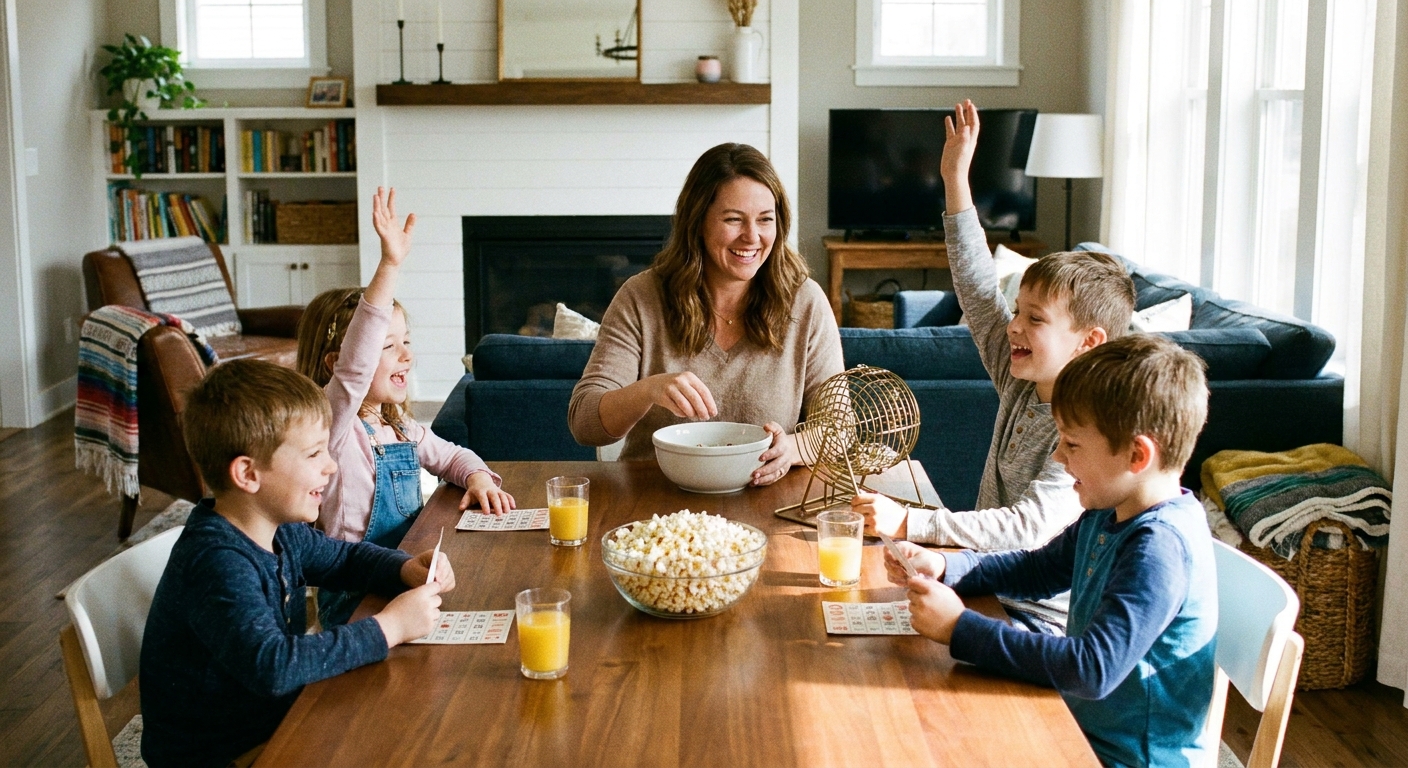
How Joke Bingo works
You, the host, read a joke setup out loud. The players look at their bingo cards for the matching punchline. If they have it, they mark it. First one to complete a line (or full house) shouts “Bingo” and has to prove it by reading their marked punchlines back to you.
- Host says: “Why did the banana go to the doctor?”
- Kids look for: “Because it wasn’t peeling well!”
That last step, reading the punchlines back, is my favourite part. It stops accidental wins and it is basically a tiny comedy show starring whoever is holding the bingo card.
What you need
- Paper or thin card (A4 is perfect)
- Scissors or a paper trimmer (if you are feeling dangerously efficient)
- Pens or markers
- A bowl, hat, or empty mug for call slips
- Something to mark with: stickers, crayons, coins, dried pasta, or scrunched tissue bits
- Optional: clear tape for reuse
Small safety note: if you are playing with little ones (or a mixed-age group), avoid tiny markers. Coins, buttons, and pasta can be a choking risk for under-3s, and they still need supervision for older kids who like to fiddle. Bigger items like large stickers, chunky counters, or scrunched paper balls are the calmer option.
If you want more giggle-ready games for parties, our Party Games guide is a handy rabbit hole to fall into.
Step 1: Pick your jokes
You will make two things from each joke:
- Call slip: the setup (what you read out)
- Card entry: the punchline (what kids mark)
How many jokes do you need?
For a classic 5x5 bingo card you have 25 spaces. You do not need 25 jokes per card if you design it sensibly, but you do need a pool of punchlines big enough to make several different cards.
- Small group (4 to 8 kids): 30 to 40 jokes is plenty
- Bigger party (10+ kids): aim for 50+ jokes so cards feel different
Choose punchlines kids can spot quickly
Short punchlines work best, especially for younger kids. If the punchline is a full paragraph, it becomes Reading Bingo, and nobody came to your party to do homework.
- Best: “Because it was two-tired.”
- Trickier: “Well, the chicken crossed the road because it had an important appointment on the other side and couldn’t find a safe pedestrian crossing.”
If you need a stash of kid-friendly humour to pull from, start with our Kids Jokes guide and pinch the clean, quick ones.
Step 2: Make call slips
This is the bit that makes the whole game run smoothly. Call slips stop you repeating jokes, and they let a helper run the game if you need to disappear for a minute and locate the child who has “just gone to check something” upstairs.
How to make them
- Cut paper into small rectangles (about the size of a tea bag label is fine).
- Write one setup per slip.
- On the back, write the punchline in smaller writing, so you can quickly confirm matches.
- Fold and drop them into a bowl or hat.
My dad tip: add a tiny symbol
If you are mixing joke types, add a little mark in the corner:
- Animal jokes: a paw print doodle
- Food jokes: a little banana
- School jokes: a tiny pencil
Then if your group is very young (or very excitable), you can do an “animals only” round without hunting through the whole pile.
Step 3: Make bingo cards
You have two options: super simple or slightly extra. I usually start simple, then get carried away, then pretend it was always the plan.
Option A: 4x4 card (ages 5 to 7)
A 4x4 grid is 16 spaces, which is easier for little eyes and short attention spans.
- Fold an A4 sheet in half, then half again, and open it back up to give yourself light crease guides.
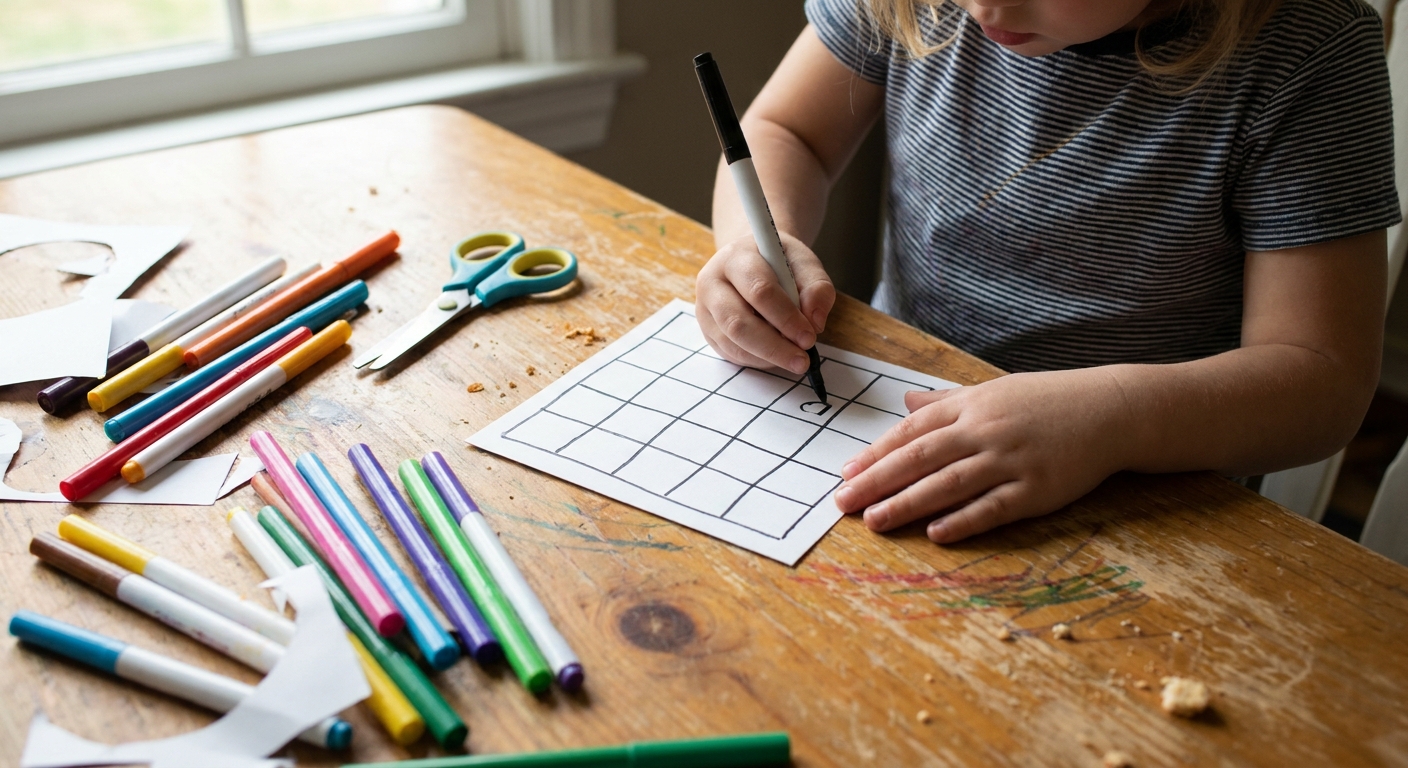
- Draw a 4x4 grid.
- Write one punchline in each square.
Make 1 card per child, plus 1 or 2 spares. You will thank yourself when somebody spills squash, or “accidentally” folds theirs into a paper aeroplane mid-round.
Make 6 to 10 cards by swapping punchlines around. Do not worry about perfection. Wobbly lines are part of the charm. That is what I tell myself anyway.
Option B: 5x5 card (ages 8+)
To make different cards without going cross-eyed:
- Write your punchlines on a master list (or on separate small scraps).
- For each card, pick 25 punchlines at random from your pool.
- Write them into a 5x5 grid. If you want, make the middle square a “FREE GIGGLE” space and let kids mark it immediately.
Make it easier to read
- Write punchlines in thick marker.
- Leave a bit of white space around each punchline.
- Avoid two punchlines that look similar at a glance.
- If you have mixed ages, add a few picture hints. A tiny doodle beside the punchline helps non-readers play along.
Step 4: Pick markers
The best bingo markers are the ones that do not permanently join your furniture.
- Stickers: very satisfying, a bit spendy
- Coins or buttons: reusable and quiet (best for older kids, and supervised)
- Dried pasta: surprisingly good, until someone eats one and you have to say, “That is raw penne, mate”
- Mini paper squares: cut up scrap paper and let kids place them like tiles
If you want reusable cards, cover them with clear tape in strips. It is not proper laminating, but it often does the job. Then kids can mark with a wipeable marker and you can clean them after.
Hosting tips
Set up
- Sit kids where they can hear you clearly.
- Give each child one card and a small pile of markers.
- Do a 30-second practice round so everyone understands: setup, search, mark.
Read like a game show host
Do not rush. Half the fun is the anticipation. I like to use this rhythm:
- Read the setup once.
- Repeat it a second time a touch slower.
- Then wait five seconds while they scan.
If you have very young kids, you can also say the first few words of the punchline after a pause as a hint.
How long does it take?
- 4x4, one line wins: often 10 to 15 minutes
- 5x5, two lines: often 15 to 25 minutes
- 5x5, full house: often 20 to 30 minutes (sometimes longer if the room is in full giggle mode)
Pick a winning rule
- Quick game: first to get one line wins
- Longer game: two lines
- Party finale: full house
My favourite for birthdays is “two lines” because it feels like a win, but it does not finish before you have even sat down.
Verification rule
When someone shouts “Bingo!” they must point to each marked square and read the punchline out loud. You confirm by flipping the matching call slips (punchline is on the back). This turns the win into a mini stand-up moment and keeps the game fair.
Variations
1) Team Bingo
Pair younger kids with older kids. The older one reads, the younger one marks. It is surprisingly sweet, and it stops the small ones from marking every square “just in case.”
2) Action Bingo
When a child marks a punchline, they have to do a tiny action quietly: thumbs up, silent jazz hands, a funny face. This keeps wrigglers busy without turning it into a stampede.
3) The “Tell it properly” bonus
If the winner can re-tell one of the jokes with good timing, they earn an extra point for their team. Not required, but it is a fun way to encourage performance.
4) Craft-and-play combo
Make the cards as the party activity, then play with what you created. If your crowd likes making props, you could add a silly host hat from this newspaper cap craft so the “official bingo caller” looks the part.
Mini joke set (12)
If you want to test the game tonight, here is a small set. Write the setups on call slips and the punchlines on cards.
- Setup: Why did the banana go to the doctor? Punchline: Because it wasn’t peeling well!
- Setup: What do you call a bear with no teeth? Punchline: A gummy bear!
- Setup: Why did the bicycle fall over? Punchline: Because it was two-tired!
- Setup: What do you call cheese that isn’t yours? Punchline: Nacho cheese!
- Setup: What do you get if you cross a snowman and a vampire? Punchline: Frostbite!
- Setup: Why can’t your nose be 12 inches long? Punchline: Because then it would be a foot!
- Setup: What has ears but can’t hear? Punchline: A cornfield!
- Setup: Why did the cookie go to the hospital? Punchline: Because it felt crummy!
- Setup: What do you call a sleeping dinosaur? Punchline: A dino-snore!
- Setup: How do you make a tissue dance? Punchline: Put a little boogie in it!
- Setup: What do you call a fish wearing a bowtie? Punchline: Sofishticated!
- Setup: What did one wall say to the other wall? Punchline: I’ll meet you at the corner!
That is enough for a 3x4 starter card (12 squares), or you can use a 4x4 and add a few extra punchlines plus a “FREE GIGGLE” square to make up the numbers.
Troubleshooting
“I marked it but I don’t have it”
Switch to reusable markers like coins or buttons (supervised), and use the verification rule where winners read punchlines back.
Two kids win at the same time
Do a sudden-death joke. Read one final setup. First to find the punchline wins, but they must say the punchline out loud without giggling halfway through. This is brutally difficult, which is why it is fun.
Kids are too loud to hear the setups
Use a silly signal for silence: the host raises a hand, kids copy it, and the room quiets down as hands go up. It feels like magic the first time it works. The second time, it feels like herding caffeinated squirrels, but still.
Ages are mixed and some can’t read yet
Use shorter punchlines, add tiny doodles next to punchlines, and play in pairs or teams. You can also read a few punchline options aloud every few turns as a refresher.
Make it a party
If you want a full laughter-themed party without buying anything fancy, pair Joke Bingo with one more quick activity:
- Funny photo booth props for arrivals and silly pictures
- Pin the Punchline as a second game station
- A family joke jar as a take-home idea so the laughs keep going
One last Toby note
The first time you run Joke Bingo, it might feel like you are juggling punchlines while a small crowd heckles you with snack requests. Totally normal. By round two, you will have a rhythm, the kids will get the hang of it, and somebody will accidentally shout “Bingo!” when they mean “I found it!” which is, honestly, a win for everyone.
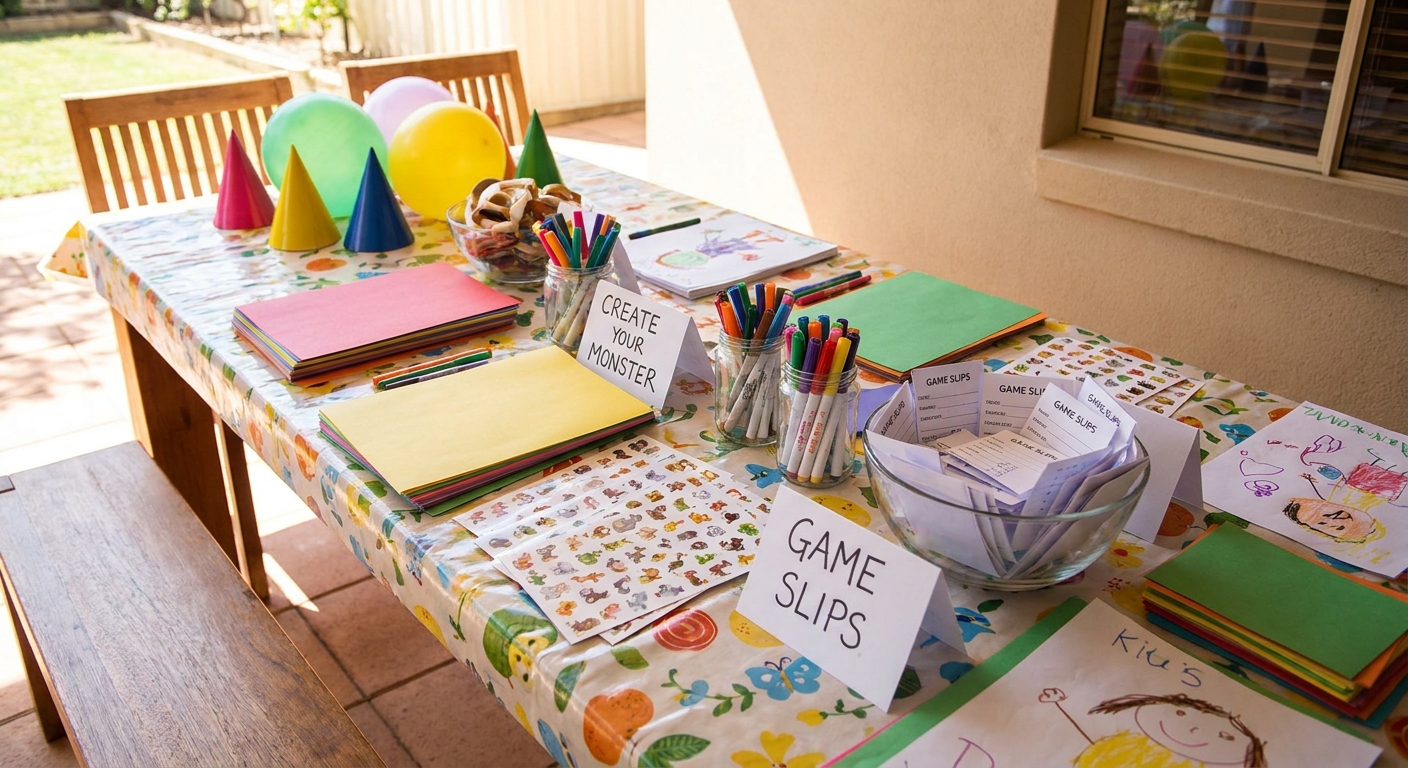
And if nothing else, you will end the party with a table full of handmade bingo cards that look like they were made by tiny comedians. Which they basically were.