
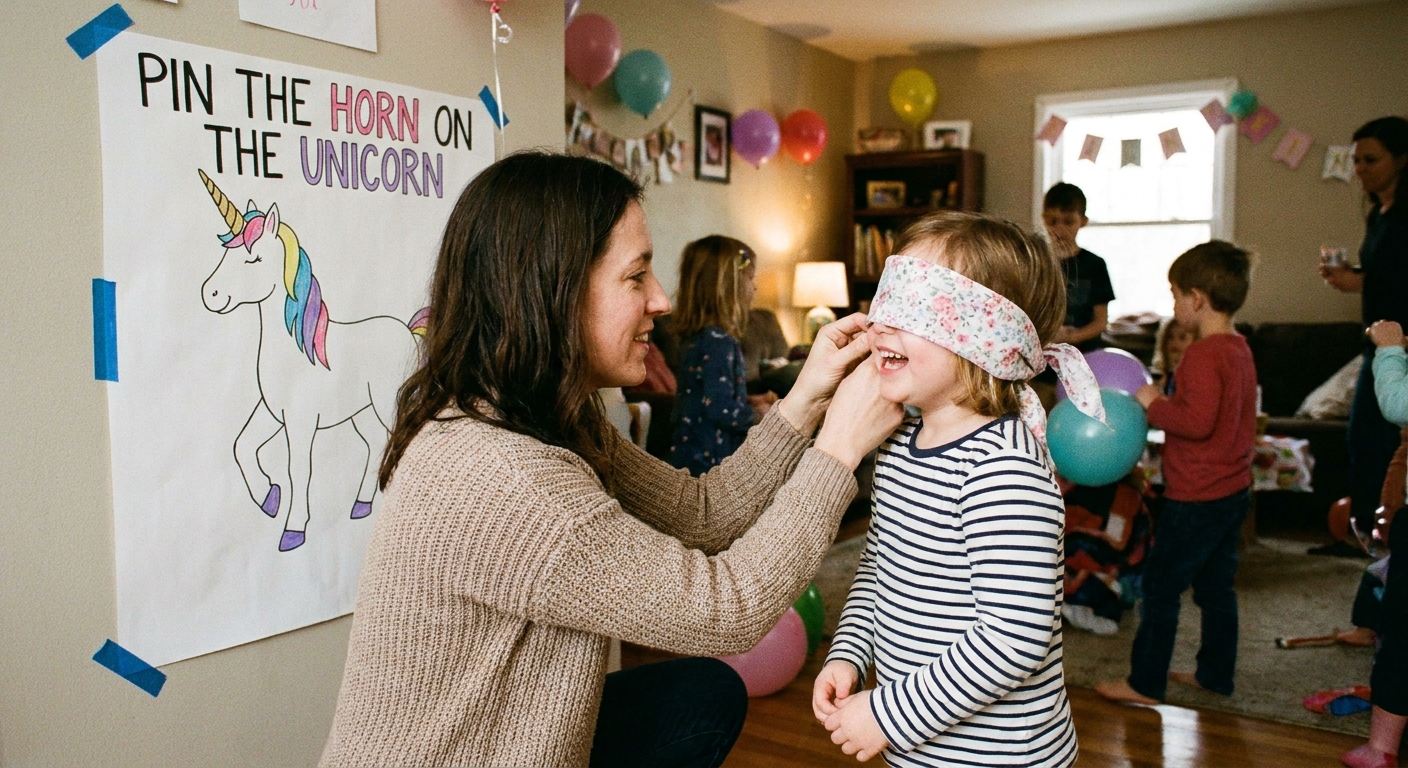
The first time I tried this at a birthday party, I confidently announced, “Right kids, it’s like Pin the Tail on the Donkey, but funnier.” Bold claim. Ten minutes later, a seven-year-old had pinned “Because it was two tired!” directly onto my elbow. The board was untouched. Everyone was howling. So yes, it works.
Pin the Punchline is a big, silly party game where kids hear a joke setup, pick the punchline card they think matches, then try to stick it on the board while blindfolded. It’s loud, quick to reset, and delightfully low-pressure because even the “wrong” answers are funny.
What you’re making
You’ll create:
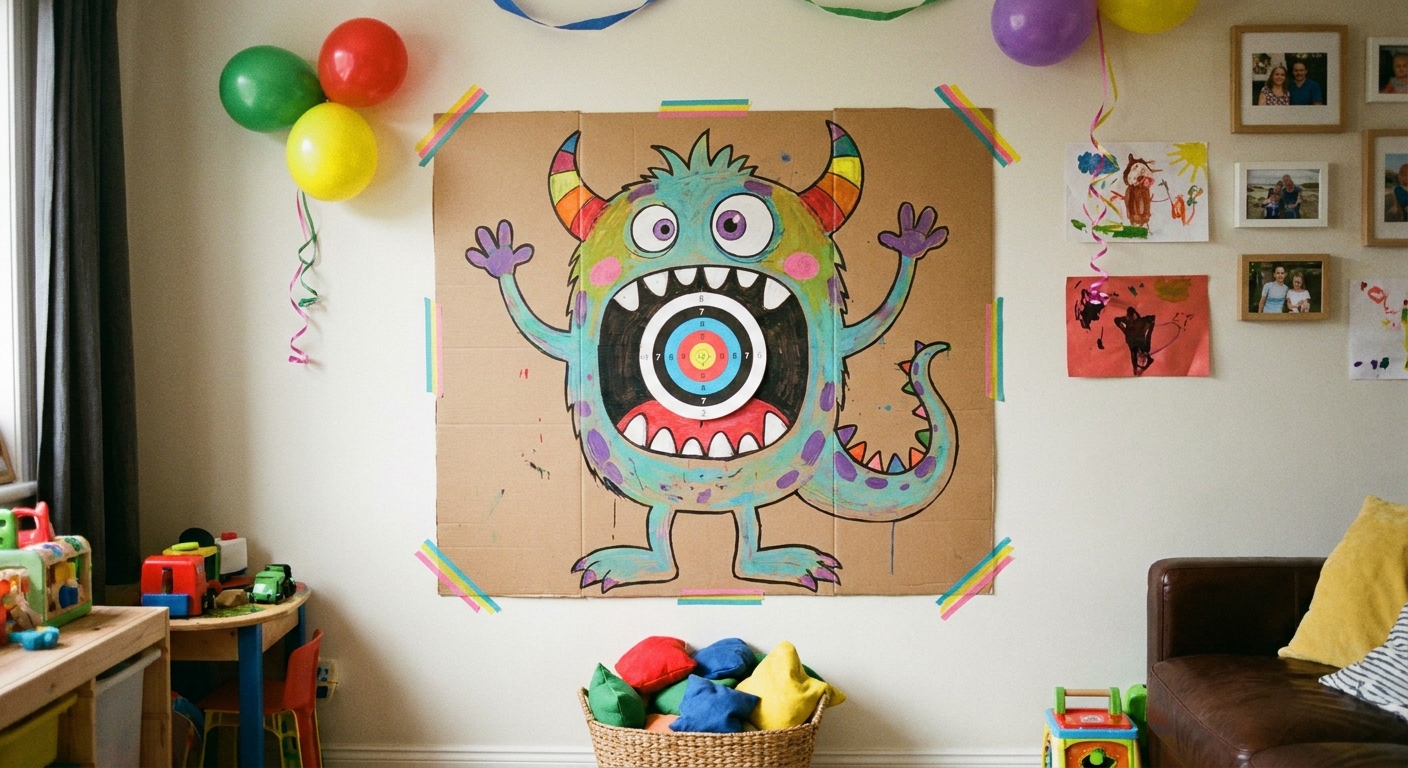
- A large poster board with a funny character (think monster, robot, pirate, unicorn, or a grumpy potato).
- A set of punchline cards with tape or sticky tack on the back.
- A simple blindfold and a “start line” on the floor.
Kids take turns: you read a joke setup, they pick the punchline they think fits, get gently spun (the classic), and try to pin it on the character.
Supplies (use what you’ve got)
- 1 large piece of cardboard or a flattened box (bigger than A2 is glorious, but any “poster-ish” size works)
- Paper for punchlines (printer paper, coloured paper, or the backs of unwanted school letters)
- Markers or crayons
- Glue stick or PVA glue
- Scissors
- Tape, sticky tack, or reusable putty for sticking punchlines on
- A blindfold (scarf, clean tea towel, or a sleep mask)
- Painter’s tape or masking tape for a start line
- Optional: googly eyes, tissue paper, stickers, yarn for hair, foil for robot bits
Wall-friendly tip: If you’re playing indoors, stick the board to a door or wall using painter’s tape rather than anything that’ll take the paint with it. Parties are expensive enough without “surprise decorating.”
Step-by-step: build the board
1) Pick your character (big shapes win)
Choose a character you can draw quickly with chunky features. My favourites are:
- Monster (easy to make cute, and extra eyes are always acceptable)
- Robot (boxes and buttons, job done)
- Pirate (big hat, bigger grin)
- Unicorn (mane made from scrap paper strips)
Draw it large, leaving plenty of empty space on the body for punchlines to land. You can label a rough “target zone” by drawing a big tummy, cape, or treasure chest, but do not worry if it’s wonky. Wonky is party-grade.
2) Add a “Punchline Pocket” area
On one side of the poster, draw a simple area where punchlines will start the round, like a bucket, speech bubble, or crate. This gives kids a predictable place to grab from before they get blindfolded.
3) Make punchline cards
Cut 10 to 18 rectangles of paper, roughly palm-sized. Write one punchline per card in big, bold letters. Keep them short enough to read quickly.
- For younger kids: 8 to 12 punchlines total
- For ages 7 to 10: 12 to 18 punchlines total
- For older kids: up to 24, if you enjoy chaos
Put a small rolled bit of tape or a blob of sticky tack on the back of each punchline card. If you’re using tape, fold it into a loop so it’s not a one-and-done sticker situation.
4) Prep the board for repeated sticking
If you have time, cover the “target zone” with a layer of clear tape strips (like DIY laminate). It helps the sticky tack release cleanly and keeps your masterpiece from turning into fluffy cardboard fuzz.
5) Make a comfy blindfold
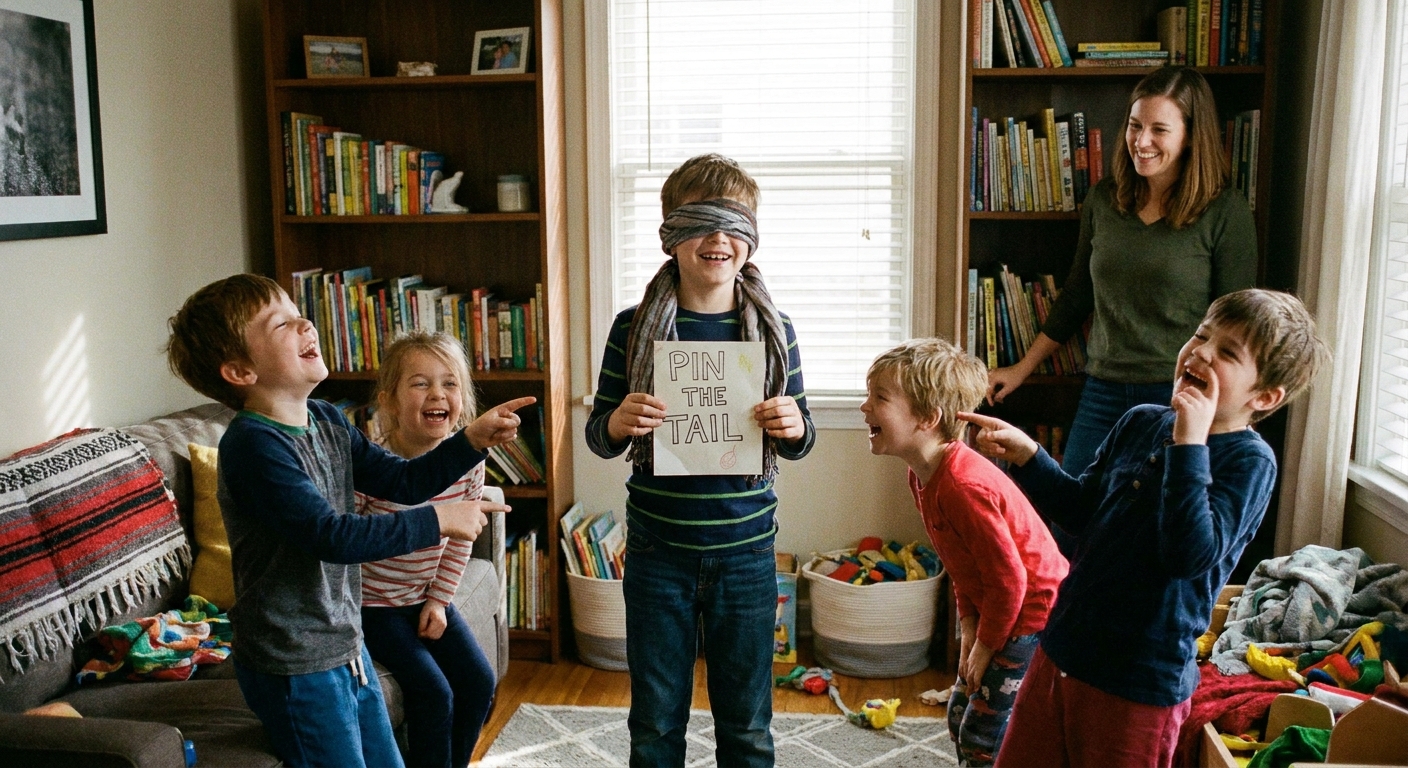
Use a soft scarf or clean tea towel and tie it gently. The goal is “can’t see the board,” not “accidental mummy cosplay.” If kids hate blindfolds, you can switch to “silly glasses” (like sunglasses) or “close your eyes and trust me” mode.
Keeping it organised (so it stays quick)
This game can get wonderfully chaotic. Here are a few sneaky tricks to keep resets fast without turning you into a punchline librarian.
- Number the backs: Write small numbers on the back of each punchline card (top corner). When they fall off or get “re-homed” under the sofa, you can gather and count them quickly.
- Colour-code sets: If you have two age groups, put younger-kid punchlines on one colour and older-kid punchlines on another. Instant sorting.
- Keep pairs together: Write the same tiny symbol on the setup list and the matching punchline card (a star, a banana, a little bike). Kids never see the backs, but you can sanity-check matches at a glance.
- One tray for “used” cards: Have a bowl, plate, or shoe box lid where punchlines go after each turn. It stops the floor becoming a paper snowstorm.
How to play (party-proof rules)
- Hang the board at kid height.
- Make a start line with tape on the floor about 1.5 to 2 metres away (closer for little ones).
- Lay out the punchlines in the “punchline pocket” area or on a table.
- Read a joke setup out loud.
- The player chooses the punchline card they think matches.
- Blindfold them and give them one gentle spin (or two if you’re feeling theatrical).
- They walk to the board and pin the punchline somewhere on the character.
- Remove blindfold, read the full joke, and award a point for the right match. Bonus point if they stick it close to the target zone.
My favourite scoring system: Keep it simple. 1 point for the correct punchline, 1 extra point if it lands in the target zone. If you want it calmer, skip scores and just enjoy the giggles.
Joke sets you can use (setup + punchline)
Pick 8 to 12 pairs for the party. Mix easy and medium. Avoid anything that needs loads of reading if your group includes early readers.
Easy (great for younger kids)
- Setup: What do you call a bear with no teeth?
Punchline: A gummy bear. - Setup: Why did the banana go to the doctor?
Punchline: Because it wasn’t peeling well. - Setup: What do you call a sleeping dinosaur?
Punchline: A dino-snore. - Setup: What do you get if you cross a snowman and a vampire?
Punchline: Frostbite. - Setup: What’s a witch’s favourite subject in school?
Punchline: Spelling.
Medium (ages 7+ usually love these)
- Setup: Why can’t your nose be 12 inches long?
Punchline: Because then it would be a foot. - Setup: What do you call cheese that isn’t yours?
Punchline: Nacho cheese. - Setup: Why did the scarecrow win an award?
Punchline: Because he was outstanding in his field. - Setup: What did one wall say to the other wall?
Punchline: I’ll meet you at the corner. - Setup: Why did the bicycle fall over?
Punchline: Because it was two tired.
Extra-silly (for kids who like nonsense)
- Setup: What do you call a fish wearing a bowtie?
Punchline: Sofishticated. - Setup: What do you get when you put a candle in armour?
Punchline: A knight light. - Setup: What do you call a cow with no legs?
Punchline: Ground beef.
If you want more kid-friendly material to pull from, I keep a growing stash in our kids jokes guide.
Make it themed (and even funnier)
Character ideas that match the punchlines
- Space Alien: punchlines about planets, stars, and “out of this world” nonsense
- Chef: food puns galore (cheese, pasta, beans, tacos)
- Pirate: “Arrr” jokes and treasure chest target zone
- Zoo Keeper: animal punchlines, lots of roaring opportunities
Speech bubbles mode
Instead of pinning punchlines on the character’s belly, draw 6 to 10 empty speech bubbles around them. Kids try to pin the punchline into a bubble. It naturally guides placement, which is helpful with a wild crowd and a very confident spinner.
For more party game ideas that don’t require fancy kit, wander through our Party Games guide.
Age tweaks
Ages 3 to 5
- Stand closer (about 1 metre)
- Use fewer punchlines (6 to 8)
- Read two choices out loud and let them pick by pointing
- Skip spinning if it turns into wobbling
Ages 6 to 8
- Use 10 to 14 punchlines
- Let them read punchline cards themselves if they want
- Add the bonus “target zone” point for gentle competition
Ages 9 to 12
- Use 14 to 24 punchlines
- Play in teams
- Add a time limit (10 seconds to stick it, dramatic countdown voice required)
Larger groups
If you have a big bunch of kids and a small bunch of minutes, the main enemy is waiting around. A few ways to keep it moving:
- Rotate roles: one adult reads setups, one adult is the gentle “spinner”, one adult is the board spotter (or nominate three sensible-ish older kids).
- Chant the setup: the group repeats the setup together, then everyone goes quiet for the punchline reveal. It turns waiting into part of the show.
- Two lanes: if you can spare a second wall or door, make two start lines and run two turns at once with two helpers. Double the speed, double the shouting.
- Team rounds: each team sends up one player, then you swap teams. It spreads out turns and stops the same three kids trying to “just have one more go” forever.
Safety and sanity tips (learned the hard way)
- Supervise blindfolds and spins: keep spins gentle, keep a hand near their shoulder, and stop immediately if anyone feels dizzy or wobbly. Laughing is the goal, not toppling.
- Clear the route: chairs, bags, and excited siblings are blindfold magnets.
- One helper by the board: gently guide hands away from light switches, picture frames, and houseplants you pretend you don’t love.
- Use soft tape: avoid pins, staples, or anything pointy. “Pin” is a figure of speech in my house.
- Keep punchlines big: large writing prevents the “what does this say?” huddle mid-game.
- Rotate punchlines: after a few rounds, swap in new ones so the game stays fresh.
Quick variations
1) Pin the Punchline Relay
Split into two teams. Each player pins one punchline, then runs back to tag the next person. Read the setups quickly like a game show host who has had one too many cups of tea.
2) Silly Voice Round
When you read the full joke, everyone must repeat the punchline in a funny voice (robot, pirate, mouse, giant). This is particularly good for kids who love performing.
3) Make your own punchline
Give kids blank cards and let them invent punchlines. Most will be nonsense. Some will be accidentally brilliant. All will be loud.
If your party crew loves joke-based crafts, you might also enjoy making funny photo booth props to keep the giggles going between games.
FAQ
How many joke pairs do I need?
For a typical party game slot (10 to 20 minutes), 10 to 14 pairs is usually perfect. If you’re playing teams or repeating rounds, aim for 18 to 24.
What if kids can’t read yet?
Read the punchlines out loud and let them choose by pointing. Or use simple picture clues on the punchline cards (a tiny doodle of a banana, a bike, a vampire). Keep the words big anyway so older kids can help.
What’s the best way to stick punchlines without ripping the board?
Sticky tack or reusable putty is the gentlest. If you only have tape, make little loops and consider covering the target area with overlapping strips of clear tape first.
Can I play without a blindfold?
Absolutely. Try “eyes closed,” “sunglasses round,” or have them face the opposite direction while you gently turn them around once. The goal is laughter, not a strict sporting regulation.