

One rainy Yorkshire afternoon, I looked at my three kids bouncing off the sofa like overexcited popcorn and thought, “Right. We need a game that’s bigger than their energy.” So we made a giant floor board game out of tape, cardboard, and pure nonsense. It’s part party game, part obstacle course, part stand-up comedy night, and it turns your living room into a place where even walking normally is strictly optional.
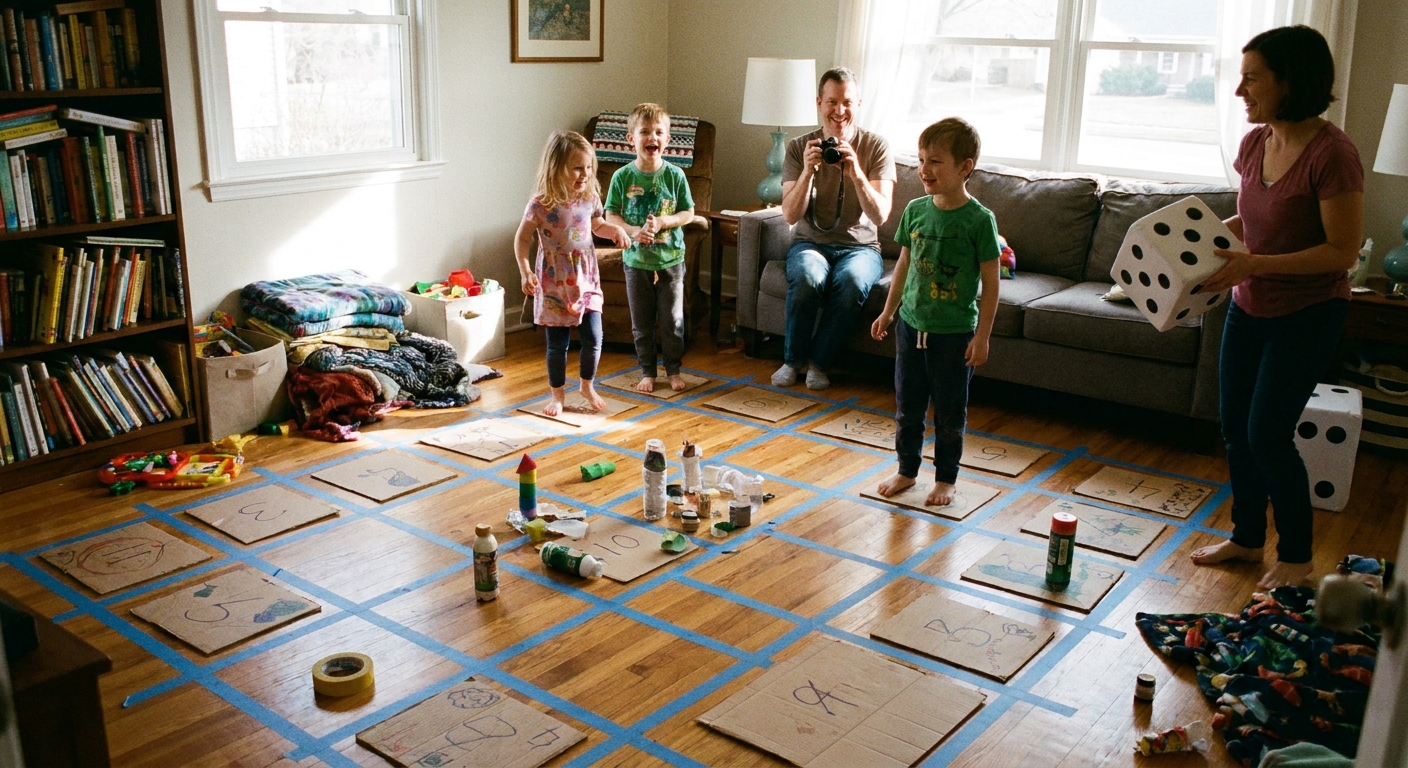
This is perfect for birthdays, sleepovers, rainy-day playdates, or any time you need a structured way to be completely unstructured.
What you’re making
A life-sized board game path on the floor, built with tape and big cardboard “spaces.” Players become the tokens. Each space has a comedy challenge: tell a quick joke, do a goofy walk, perform a tiny “set,” or complete a silly sound effect without cracking up.
- Best ages: 5 to 12 (with easy tweaks for younger kids and big kids)
- Time to set up: 20 to 40 minutes
- Play time: 20 minutes to “until someone collapses laughing”
- Players: 2 to 10
Supplies (mostly recycling-bin treasure)
- Painter’s tape or masking tape (painter’s tape is kinder to floors)
- Cardboard (delivery boxes are basically parenting gold)
- Marker pens
- Scissors
- Optional: sticky notes (for swapping challenges easily)
- Optional: a die (or a DIY spinner)
- Optional: 6 to 10 small props (a spoon microphone, a hat, a scarf, sunglasses)
If you don’t have a die, you can make one quickly from a small cardboard box. If you’re a spinner family, my DIY joke generator spinner wheel can pull double duty as your “movement picker” too.
Safety and sanity first (my two favourite party guests)
- Pick the right tape: use painter’s tape on wood or laminate. Test a tiny piece first if your floor is precious.
- Non-slip rule: socks plus fast turns equals cartoon physics. Bare feet or grippy socks are best.
- Clear the track: move coffee tables, toys, and anything shin-height.
- No jumping squares if you’re on slippery flooring. Keep challenges “silly,” not “stunt.”
- Prop check: avoid anything pointy, glassy, or likely to become a lightsabre.
Step 1: Tape out your board
You can go classic (a winding path) or go full game-show (a grid). My favourite is a simple winding track because it feels like a real board game and you can fit it around furniture.
Easy layout options
- Winding path: 24 to 40 spaces in a snaking line across the room.
- Big grid: 5 x 5 (25 spaces) or 6 x 6 (36 spaces). Players move right, left, up, down following arrows.
- Loop track: a big rectangle around the edge of the room with a finish line back near the start.
Use tape to mark “lanes” on the floor, about the width of a child’s shoulders. Keep turns wide so no one has to do a three-point turn like a confused bus.
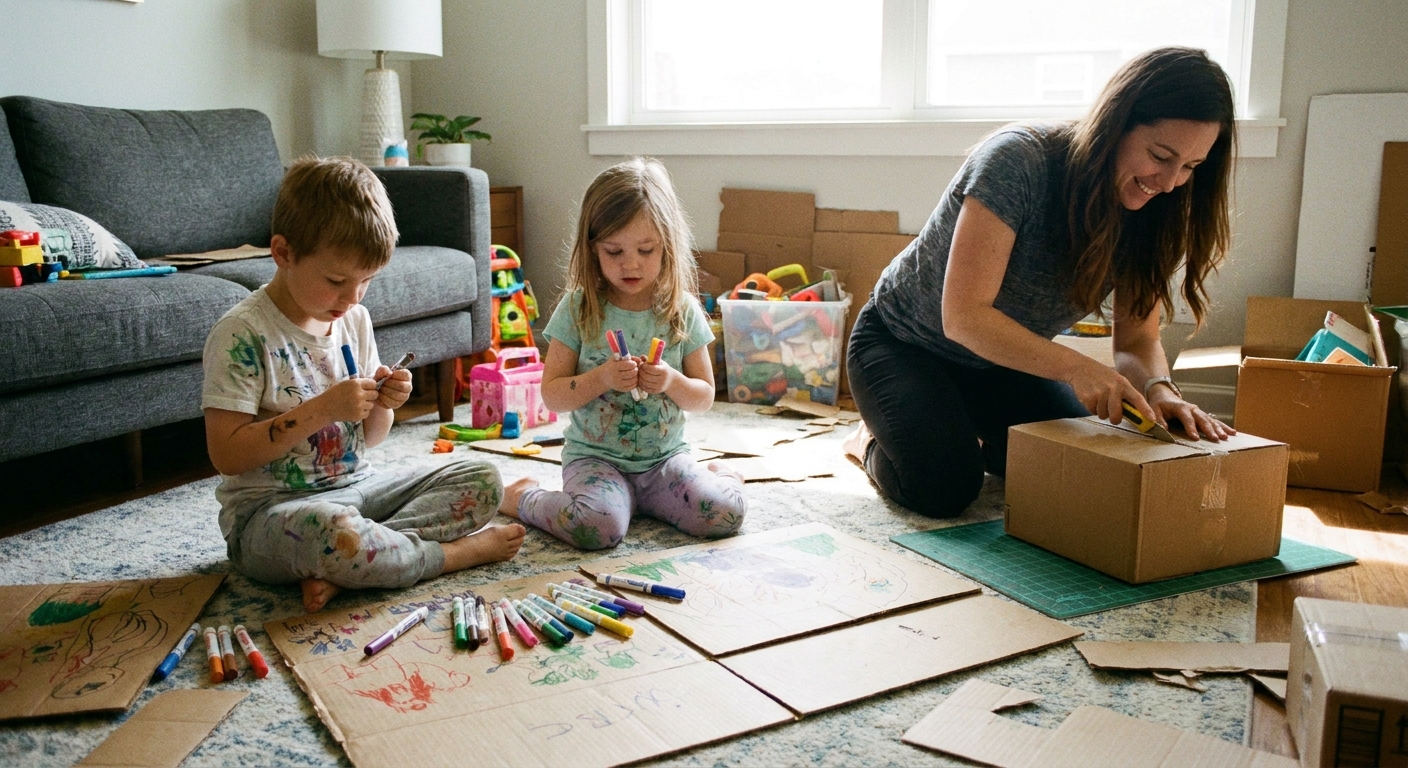
Step 2: Make the giant cardboard spaces
Cut cardboard into big squares or rectangles. Aim for roughly dinner-plate size or larger so little feet fit without teetering.
- Quick version: 24 to 30 spaces
- Party version: 36 to 48 spaces
Write one challenge per space in thick marker. If you want to reuse the board with different themes, stick a blank sticky note on each space and write the challenge on that instead.
Step 3: Add a start, finish, and a few special spaces
Special spaces make it feel like a real board game and give you natural moments to slow the chaos.
- START: Everyone does their best “game show wave.”
- FINISH: Winner gets a ridiculous title like “Chief Giggle Officer.”
- Joke Bonus: tell a joke, move +1.
- Giggle Trap: if you laugh during someone else’s challenge, move -1.
- Prop Stop: pick a prop and you must use it for your next challenge.
- Audience Applause: everyone claps like seals for 5 seconds, then carry on.
If you want more structured comedy, you can add a “mini stage” area with a pretend mic. We’ve made one before using this idea: kids comedy night microphone and stand-up tips.
How to play (simple rules that actually survive a party)
- Everyone stands on START.
- Youngest player goes first (or whoever last told a joke).
- Roll a die and walk that many spaces, but you must do the walk style of your current space, if it has one.
- When you land on a space, do the challenge written there.
- If you complete it, you stay. If you refuse or forget (happens to the best of us), move back one space and do a “dramatic sigh.”
- First to FINISH wins, but everyone must do one final group challenge at the end.
Party tip: If you’ve got more than 6 kids, play in two teams. Teams move together, and each player takes turns doing the challenges. It keeps the waiting time down and the giggles up.
Comedy challenge ideas (copy straight onto your spaces)
Stand-up mini prompts
- Tell a joke about food.
- Do your best “teacher voice” and tell a joke like it’s a lesson.
- Make up a joke using the words: banana and underpants.
- Tell a knock-knock joke. If nobody laughs, bow anyway.
- Do a 10-second “serious news report” about a silly thing.
- Say: “In my opinion…” then give the funniest opinion you can about socks.
Goofy walks (the living room catwalk)
- Robot walk to your next turn.
- Tiptoe like a sneaky mouse.
- March like you’re in a tiny parade.
- Walk like your shoes are made of jelly.
- Crab walk for 3 steps (then normal walking, because safety).
- Slow-motion walk like you’re in an action film, but the action is losing a crisp.
Sound effects and silly skills
- Do your best animal noise. Everyone guesses.
- Laugh like a villain for 5 seconds.
- Pretend to be a malfunctioning toy and “power down.”
- Say a tongue twister three times fast (or as fast as your mouth allows).
- Make a drumroll using your thighs, then announce your own name like a celebrity.
- Speak for one turn in a whisper. Extra points if it’s dramatic.
“Don’t laugh” challenges (careful, these are powerful)
- Stare contest with the next player. No smiling.
- Keep a straight face while someone tells their worst joke.
- Try to say “bubble bath baboon” three times without giggling.
If your kids love tongue twisters, you can sneak in more of that energy with monster corner bookmarks with hidden tongue twisters on another day.
My favourite “Comedy Cards” twist (optional, but brilliant)
If you want less writing on the floor spaces, turn challenges into cards.
- Cut 30 to 60 small rectangles from cardboard.
- Write one prompt per card.
- When a player lands on a blank space, they draw a card and do it.
- Kids can help invent prompts, which is how you end up with cards like “pretend to be a toast astronaut.”
This pairs nicely with a craft like the family joke jar. Keep the cards in the jar and pull them out whenever the mood strikes.
Make it work for different ages
Ages 4 to 6
- Use a shorter board: 16 to 24 spaces.
- Choose “do” prompts, not “invent” prompts (animal noise, silly walk, funny face).
- Let them move even if they chicken out. Confidence first, comedy second.
Ages 7 to 9
- Add simple joke starters: “Why did the…” and “Knock knock…”
- Add light performance bits: “Tell a joke like a pirate.”
- Introduce special spaces like Bonus and Giggle Trap.
Ages 10 to 12
- Try 45-second mini sets with a topic: school lunches, siblings, pets.
- Add “callback” prompts: reference a joke someone told earlier.
- Let them write half the prompts. They’ll be weirdly good at it.
Fast clean-up (because future you deserves nice things)
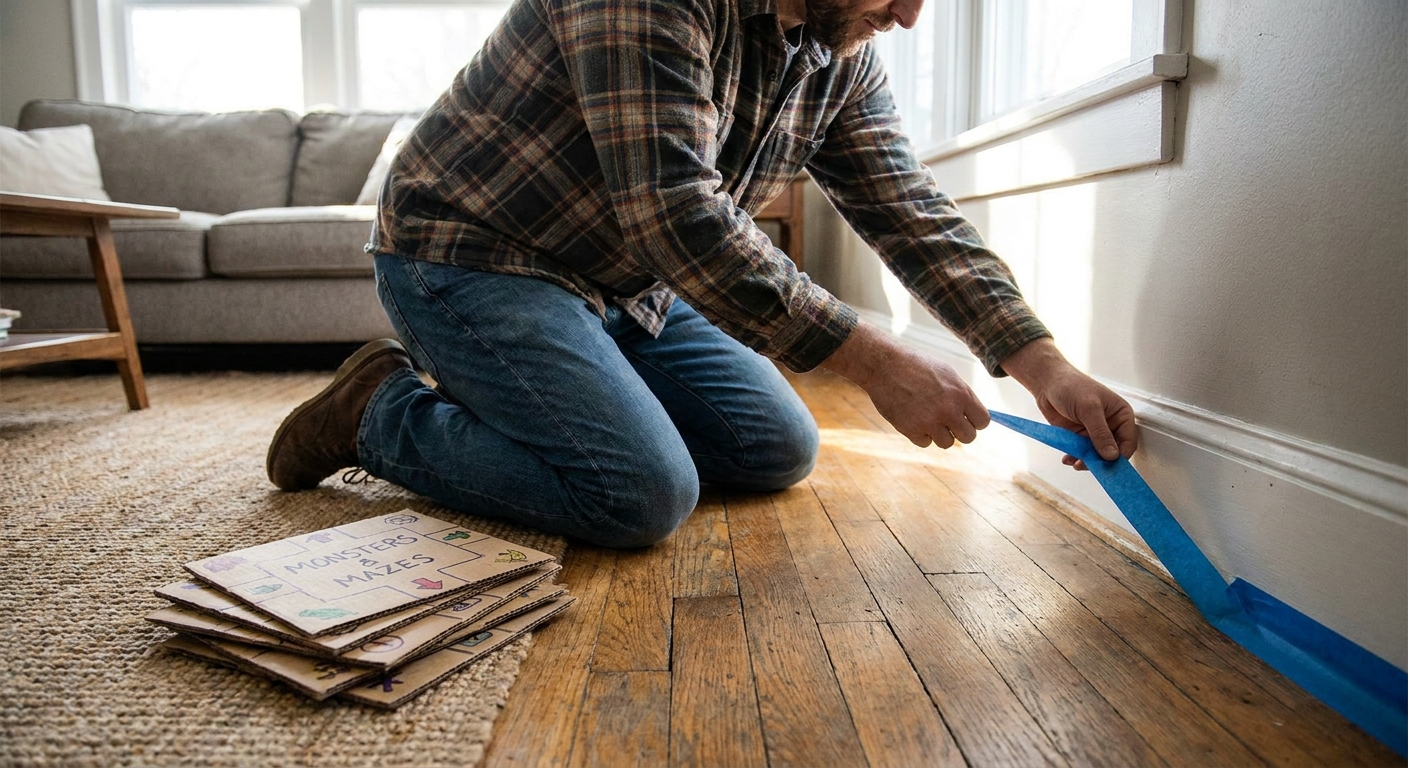
- Stack cardboard spaces like pizza boxes and slide them under a sofa or bed.
- Peel tape slowly at a low angle to avoid floor drama.
- Snap a quick photo of your layout first so you can rebuild it in 5 minutes next time.
If you want more party-game chaos (the good kind)
If this went down well, you’ve clearly got a house full of tiny comedians. Here are a few more games that hit the same sweet spot of movement plus laughs:
One final warning from a dad who has seen things: once you build a life-sized board game, your kids will ask for a sequel. Fortunately, cardboard is free and dignity is optional.