
One rainy Yorkshire afternoon, I handed my youngest a white crayon and a sheet of paper and said, “Write a joke.” He stared at me like I had asked him to knit a sofa. Five minutes later he proudly showed me… a completely blank page.
Perfect. That is exactly what we want today.
This craft is called wax-resist, but in our house it is known as Invisible Joke Magic. Kids draw punchlines with a white crayon (so you cannot see them), then paint over the whole page with watercolours, and boom, the hidden jokes and doodles pop out like a surprise giggle.
Good to know before you start: This works brilliantly most of the time, but the “wow” level can vary a bit depending on crayon brand, how hard kids press, the paper, and how watery the paint is. (So yes, it is magic, but it is also… craft magic.)
Ages: about 3+ (with help for the littlest). Time: 5 minutes to set up, 10 to 20 minutes to paint, then 10 to 30 minutes to dry (longer if someone “accidentally” uses the water pot as a swimming pool).
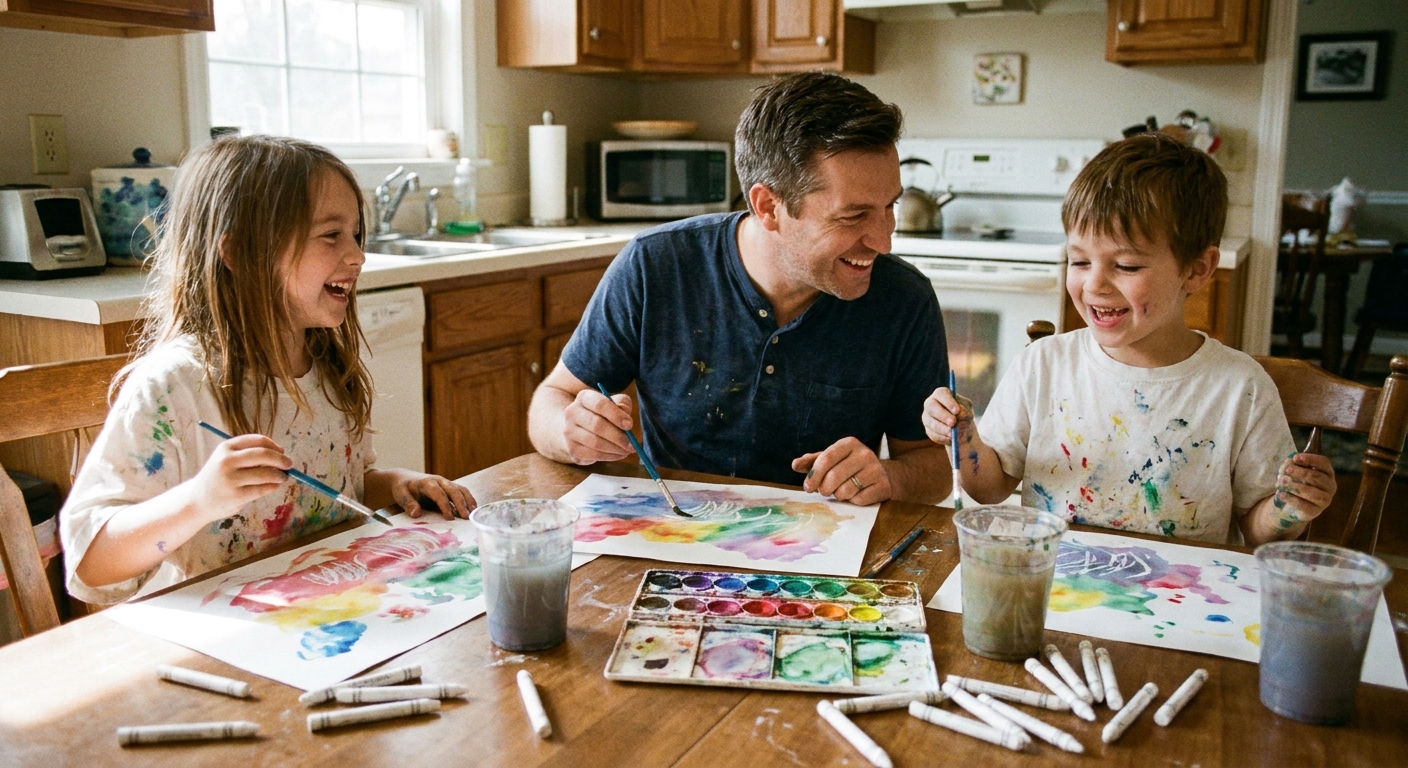
What you need
- White crayon or white oil pastel (crayon works brilliantly)
- Watercolour paints (a basic kids set is fine)
- Watercolour paper if you have it, or thicker printer paper
- Paintbrush (medium size is easiest)
- Water cup and an old towel or kitchen roll
- Optional: masking tape for borders, table cover, apron or old T-shirt
Quick table-saving tip: Slide a cereal box or a few sheets of scrap paper underneath the artwork. Watercolours love to sneak through like they pay rent.
Quick safety note: Use non-toxic supplies, supervise younger kids around water cups (and enthusiastic paint stirring), and do a quick handwash at the end. White crayons are not a snack, even if they look like one.
How the trick works
Crayon is waxy, and wax repels water. So when you paint watery colour over crayon marks, the paint will not stick there. The white lines stay bright, and suddenly your “blank page” reveals secret drawings and words.
It is basically science… but with more snorting laughter.
Step-by-step
1) Pick a joke style
You can hide a punchline, a riddle answer, or even a tiny comic scene. If your kids get stuck, let them write the last line only. Then you read the joke out loud and they reveal the ending like a magician.
If you need a warm-up, our kids jokes guide is packed with family-friendly silliness.
2) Draw with a white crayon (press firmly)
On the paper, have kids write the punchline in big letters. Then add doodles that match it: a banana, a dinosaur, a goofy face, a whoopee cushion, whatever makes them grin.
- Press hard. A gentle tickle of crayon will not resist the paint as well.
- Keep it simple. Thick lines show up best, especially for younger kids.
- Secret message idea: Write the punchline upside down and reveal it, then rotate the paper like a dramatic game show.
3) Optional: tape a border
Masking tape around the edges gives a neat white frame when you peel it off. It also makes the artwork feel fancy, which is hilarious when the message says something like “I FARTED” in invisible letters. If you are doing this for school or a more polite crowd, swap it for “SILLY SAUSAGE” or “BOTTOM BURP” and everyone still wins.
4) Paint over everything with watercolours
Use bold colour and plenty of water. Paint right over the invisible crayon. Encourage kids to cover the whole page so the reveal feels properly magical.
- For maximum reveal: darker colours (blue, purple, red) make the white crayon pop.
- For cool effects: paint stripes, gradients, or a rainbow wash.
5) Let it dry, then do the big reveal
Hold it up. Read the joke. Let the kids shout the punchline like they are on stage. If you want to be extra, announce the result in your most serious voice.
5 easy invisible punchlines
These are short enough to fit in chunky kid handwriting, and silly enough to earn a proper groan. Each one includes a quick setup line you can say out loud before the painting gets revealed.
- Setup: “Why couldn’t the bicycle stand up by itself?” Punchline: “Because it was two-tired!” (Draw a bicycle)
- Setup: “What did the lettuce say when it answered the door?” Punchline: “Lettuce in!” (Draw a door and a smiling lettuce)
- Setup: “Why did the horse get a sore throat?” Punchline: “It was a little hoarse.” (Draw a horse singing)
- Setup: “What do you call a fish wearing a bowtie?” Punchline: “Sofishticated!” (Draw a posh fish)
- Setup: “What did the flag say to the other flag?” Punchline: “Nothing, it just waved.” (Draw a flag)
Want more joke-based crafts? The popsicle stick puns activity is another brilliant way to hide punchlines in plain sight.
Reveal games
The gallery walk
Lay all the dried paintings on the floor. Everyone walks around like they are at a posh museum. You read each punchline in a very serious voice. Bonus points for pretending to wipe away a tear because the comedy is “so moving”.
Guess the joke
One child writes an invisible punchline. Everyone else tries to guess the setup before it gets painted. It is chaos. Lovely chaos.
Joke chain wall
Tape the finished art in a line down a hallway and turn it into a “laugh trail”. If your family likes ongoing joke projects, our 30-day joke chain is made for that sort of daily silliness.
Troubleshooting
My white crayon is not showing up
- Press harder with the crayon.
- Use thicker lines and bigger letters.
- Try darker paint colours.
- If the paper is very textured, switch to smoother, thicker paper.
The paper is curling
- Use less water, or thicker paper.
- Tape the edges down before painting.
- Let it dry under a heavy book (put scrap paper on top so you do not create a modern art stain).
The paint looks pale and patchy
- Load more pigment onto the brush.
- Paint the background twice, once the first layer is dry.
- Try a bigger brush for smoother coverage.
The crayon smeared
This can happen, especially with oil pastels, softer crayons, or if kids scrub at the page with a wet brush or hand. It still looks cool. If you want less smudge, use lighter brush pressure and try not to rub the crayon lines once they are down.
Age tweaks
Ages 3 to 5
- Skip writing and do simple shapes: stars, hearts, silly faces.
- You write the punchline in white crayon first, then they paint.
- Use a bigger brush and fewer colours.
Ages 6 to 9
- Let them write punchlines in big bubble letters.
- Add a picture clue so others can guess the joke.
- Try patterned backgrounds: zigzags, dots, or a rainbow wash.
Ages 10+
- Create a full mini comic: invisible speech bubbles, visible background.
- Hide multiple punchlines around the page like an “I Spy” joke hunt.
- Add a second resist layer: draw, paint, dry, then add more crayon and paint again.
Less mess, more laughs
Watercolour is one of the friendlier messes, but it still loves a dramatic spill.
- Use a sturdy water cup and fill it halfway.
- Keep an old towel within arm’s reach.
- Aprons or old T-shirts save outfits and your sanity.
- If you are doing this at a birthday, add it to a craft table line-up from our party games guide so kids can rotate between activities.
Keep the fun going
If your kids love the “secret message” part, you can turn this into a whole comedy-and-crafts afternoon:
- Make a few reveal paintings, then follow with paper fortune cookies with joke fortunes for extra surprises.
- Or finish with a family joke jar so you have punchlines ready for the next rainy day.
And if your first attempt looks like a soggy rainbow fought a crayon, congratulations. You have made authentic kid art. Hang it proudly. Laugh loudly. Repeat tomorrow.