

My toddlers did not truly get knock-knock jokes until we gave the joke a job to do.
See, “Knock knock” is not just words. It is a rhythm. A little back-and-forth. A tiny bit of waiting your turn (which, in toddler terms, is basically an Olympic sport).
So I started making a miniature cardboard door we could actually knock on and open. Suddenly the joke had a beginning, a middle, and a big dramatic reveal. Also, it gave their hands something to do besides poking my eyeballs. Win.
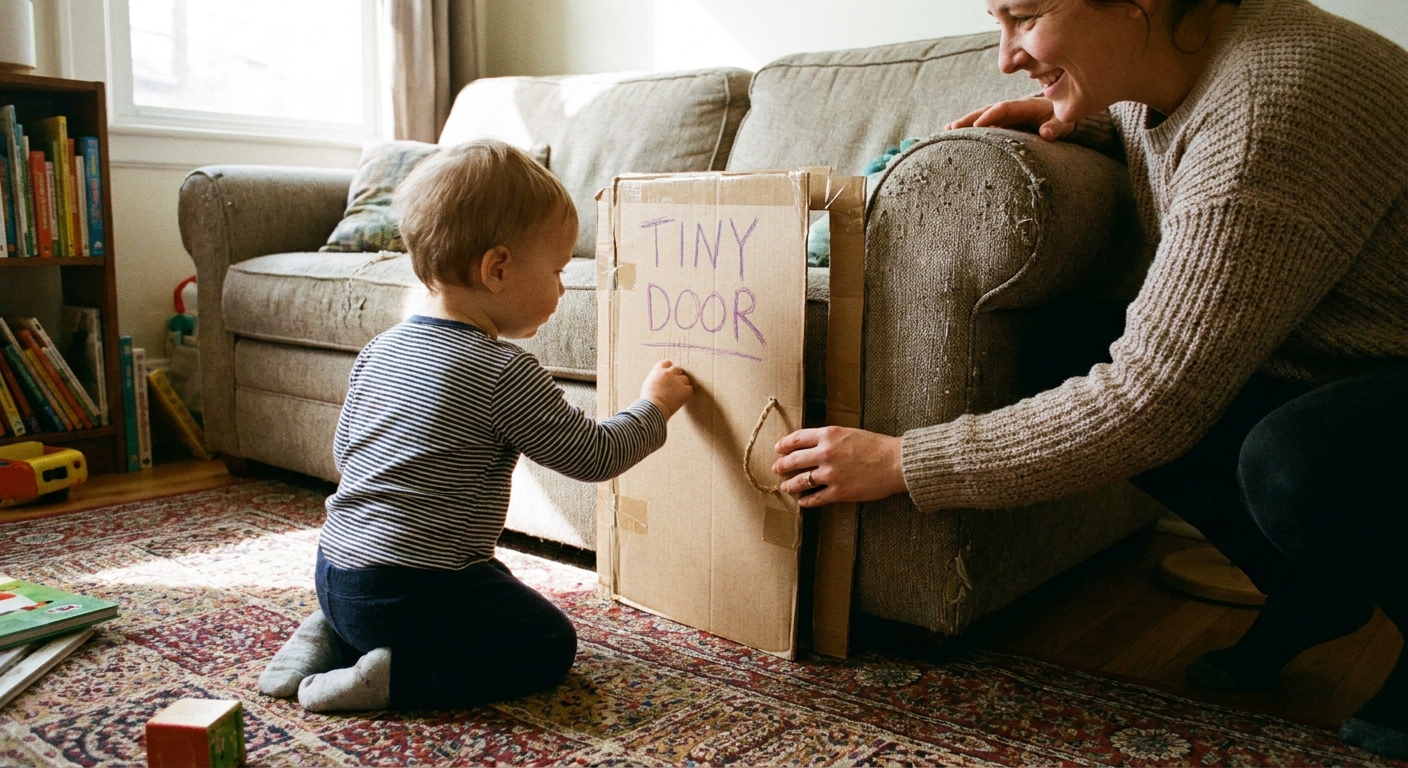
Why it works
- It makes the pattern physical. Knock, wait, reply, open. Toddlers often love cause and effect.
- It supports turn-taking. One person knocks, the other answers. Then swap.
- It can boost confidence. The door cues what to say next, even when the words are wobbly.
- It invites pretend play. Your child is not “telling a joke”, they are “answering the door”. Same skill, more magic.
What you need
This is a recycling-bin treasure kind of project. Fancy supplies are allowed, but absolutely not required.
- A medium cardboard box (cereal box is too flimsy, a delivery box is perfect)
- Scissors (and/or a craft knife for adults only)
- Strong tape (packing tape or duct tape)
- Glue stick or PVA glue (optional for decorating)
- Marker pens or crayons
- Optional: paper scraps, stickers, washi tape, a ribbon, an old gift tag
Grown-up safety note: If you use a craft knife, do the cutting away from little hands. Cardboard can be surprisingly bitey.
Another quick safety note: If your toddler is in a “put everything in my mouth” phase, keep tape scraps and loose bits out of reach, and consider running tape along any sharp cut edges so you get fewer cardboard paper cuts.
Build the mini door
1) Cut your frame panel
Cut one large flat rectangle from your box. A good toddler size is about 30 cm tall by 22 cm wide, but anything around that works. This is your “wall” that the door sits in.
Optional durability upgrade: Before you start cutting the door flap, run tape around the outside edges of your panel. It helps the whole thing survive enthusiastic knocking sessions.
2) Draw the door
On the panel, draw a door rectangle roughly 20 cm tall by 12 to 14 cm wide, leaving a border around it so the frame stays sturdy.
Make it simple. Toddlers are not judging your joinery.
3) Cut three sides
Cut the top, bottom, and the side where you want the handle or knob. Leave the hinge side uncut so it stays attached.
Now you have a working cardboard flap door.
4) Reinforce the hinge
Open the flap and run a strip of strong tape along the hinge line on the front. Then add another strip on the back. This makes it open and close smoothly instead of tearing after five heroic knocks.
5) Add a handle toddlers can grab
You have a few easy options:
- Tape loop: Fold a small strip of tape onto itself (sticky side out), stick it on as a little knob.
- Ribbon pull: Tape a short ribbon to the handle side so they can tug it.
- Cardboard knob: Roll a small bit of card into a tube, tape it on.
6) Make it stand up
If you want the door free-standing (rather than held by a grown-up), you have two simple choices.
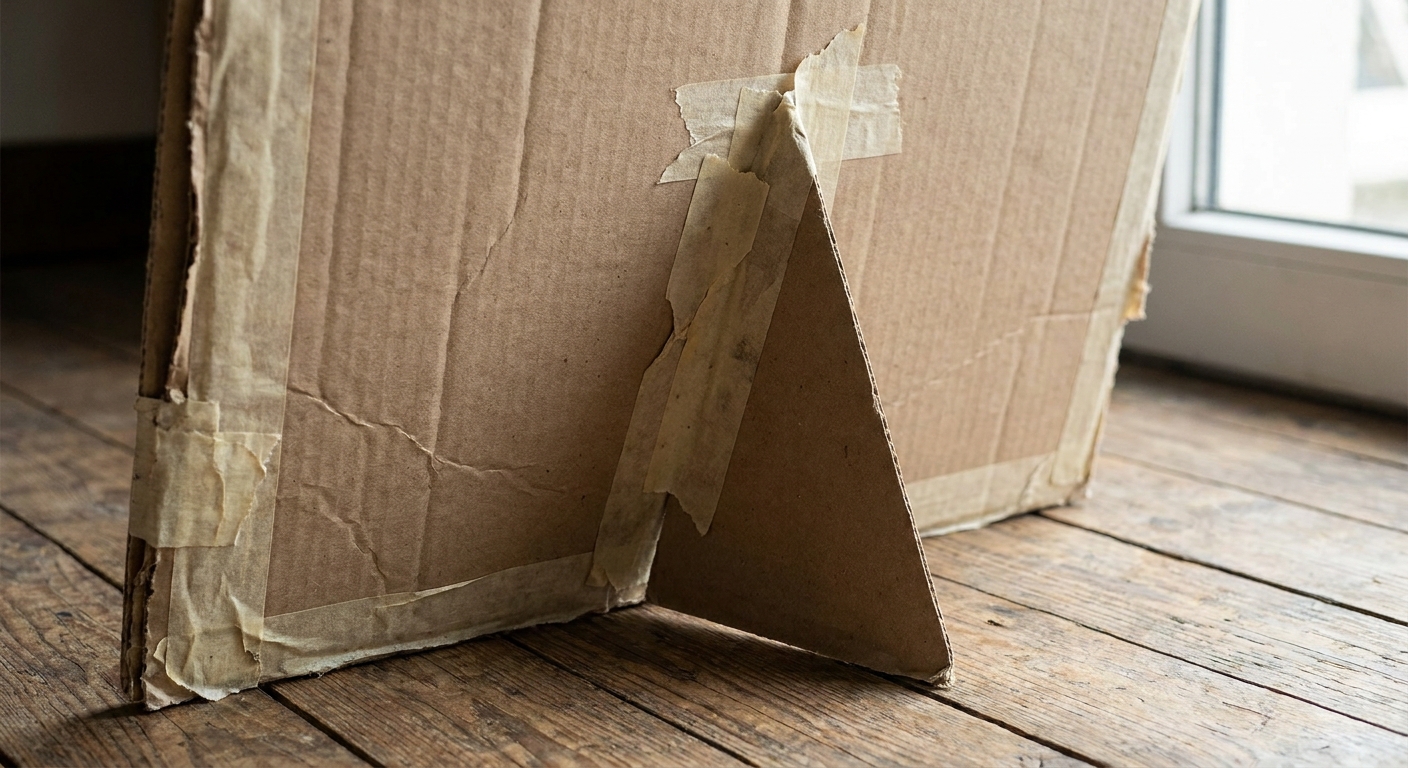
Option A: Easel stand (easy and flat-storing)
- Cut a strip of cardboard about 6 cm wide and roughly the height of your panel.
- Fold it lengthways into a long triangle (like a Toblerone shape).
- Tape one long edge to the back of the panel, about one-third of the way up from the bottom.
Option B: A-frame (extra sturdy)
- Tape a second piece of cardboard behind the panel like a hinged “back leg”.
- Open it like a picture frame stand so it forms an A shape.
- Add a strip of tape across the bottom as a stopper so it cannot splay too far.
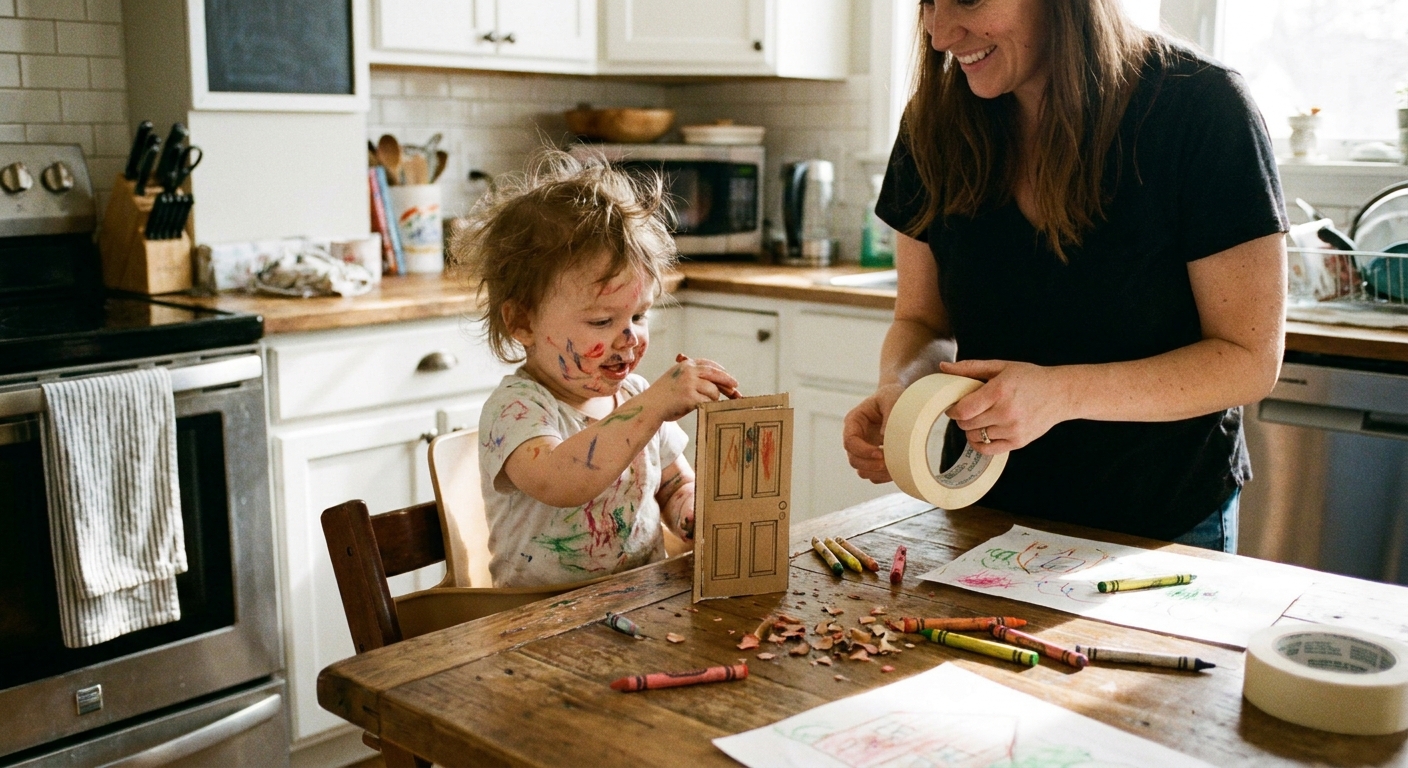
Decorate it
This part is where toddlers go full interior designer. Keep it low-pressure.
- Draw a doorbell and let them press it before knocking
- Add a “mail slot” by taping on a little flap (purely decorative is fine)
- Stick on paper shapes as “windows”
- Make a tiny welcome mat with a scrap of brown paper
My dad tip: If your child wants to decorate the hinge with stickers, let them. Then quietly add your reinforcement tape underneath. This is parenting in a nutshell.
Set up to play
If your door is not free-standing, I like to sit cross-legged and hold the panel upright with one hand, like a tiny stage. Toddler sits in front as the “knocker”. If it is free-standing, lean it slightly against a sofa or wall so it does not scoot across the room mid-joke.
Use it for jokes
Basic routine
- Child knocks on the door.
- Adult says: “Who’s there?”
- Child says the first silly word (the “name”).
- Adult says: “(Name) who?”
- Child says the punchline.
- Adult opens the door dramatically and laughs like it is the funniest thing since sliced bananas.
Turn-taking version
After one joke, swap roles. You knock. Your toddler answers. If they freeze, you whisper the line and let them “own” it. The goal is rhythm and confidence, not perfection.
For very young toddlers
Do a “repeat after me” knock-knock:
- You: “Knock knock.”
- Them (you prompt): “Who’s there?”
- You: “Boo.”
- Them: “Boo who?”
- You: “Don’t cry, it’s just a joke.”
Then open the door and do an exaggerated surprised face. Toddlers often love the predictability.
10 toddler-friendly jokes
These are short, gentle, and forgiving if your child only half-says the words (which they will, proudly).
- Knock knock. Who’s there? Boo. Boo who? Don’t cry, it’s just a joke.
- Knock knock. Who’s there? Cow says. Cow says who? No silly, cow says moo.
- Knock knock. Who’s there? Olive. Olive who? Olive you.
- Knock knock. Who’s there? Banana. Banana who? Banana split so I knocked.
- Knock knock. Who’s there? Lettuce. Lettuce who? Lettuce in, it’s cold out here.
- Knock knock. Who’s there? Peas. Peas who? Peas be my friend.
- Knock knock. Who’s there? Harry. Harry who? Harry up and open the door.
- Knock knock. Who’s there? Duck. Duck who? Duck! I’m throwing tickles.
- Knock knock. Who’s there? Bee. Bee who? Beeep beeep! I’m a buzzy bee.
- Knock knock. Who’s there? Kitten. Kitten who? Kitten me in, please.
If you want more giggles-on-demand, our kids jokes guide is a handy place to rummage around.
Silly door visitors
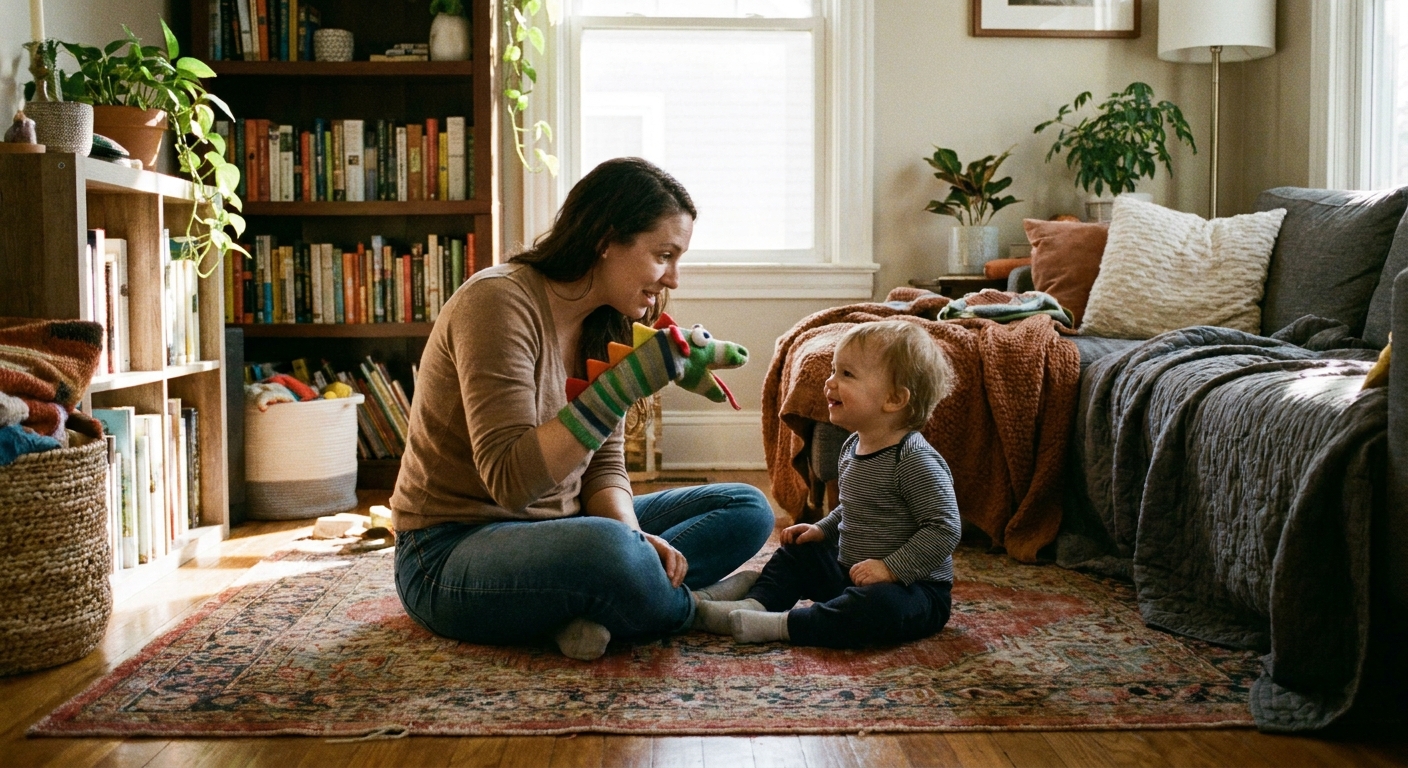
This is where the cardboard door turns into full pretend play. Keep a small basket of “visitors” nearby and pick one before you start.
- A teddy bear who tells the joke in a tiny voice
- A sock puppet “delivery person” (bonus points for a silly hat)
- A toy dinosaur that cannot reach the doorknob (dramatic struggle encouraged)
- A grown-up hiding behind the door with different voices
If your house already has sock puppets in it (mine does, permanently), pair this with sock puppets and silly puns for a full rainy-afternoon show.
Troubleshooting
The hinge rips
Add a wider strip of tape across the hinge on both sides. If it is already torn, tape it shut, then tape over the tear like a little “bandage”. Cardboard heals wonderfully with tape.
The door will not stand
Make the stand bigger, switch to the A-frame option, or lean the whole panel against a sofa or wall. Toddlers do not mind. They just want the knock.
My toddler only knocks and runs
Congratulations, you have invented “Door Dash Comedy”. Let them run. You can keep saying “Who’s there?” in an increasingly dramatic voice until they come back for the reveal.
My toddler shouts the punchline early
Normal. Try a simple cue: hold the door closed with your hand and say, “Wait for the door to open.” The door becomes the pause button.
Two variations
Double door
Cut two doors side-by-side in a larger panel. One child knocks on their door while the other answers on theirs. It turns into a silly little stage show very fast.
Mystery voice door
Put the door panel on a chair, and sit behind it. Use different voices for “Who’s there?” Toddlers love guessing who is behind the door, even when it is obviously Dad doing his best robot voice.
Store it
The best part of cardboard is that it stores like a pancake. Let it lie flat behind a sofa or bookcase, or slide it next to the recycling bin so you remember where it lives. If the handle sticks out, just fold it inward or swap it for a ribbon pull.
One last dad promise
If your door ends up lopsided, covered in stickers, and held together by heroic quantities of tape, you have made the correct door.
The goal is not a perfect craft. The goal is a toddler who learns the back-and-forth of a joke, gets brave enough to “perform” it, and then cackles like they have just invented comedy.
If your family enjoys jokes with a bit of hands-on play, you might also like our cardboard microphone for kids comedy night.